Quenching the World's Thirst with AI
How AI and nanotech are quietly rewriting what's possible in water.
 Sahir Maharaj10 min read
There is a number that keeps pulling me back whenever conversations about AI and big global problems start to feel abstract. The number is two billion. That's roughly how many people right now don't have safe drinking water at home. Not in some loose definition of water stress, but in the daily, grinding sense of waterborne disease, hours lost to collection, and all the downstream consequences of not having something this basic. The global water crisis is a present emergency, distributed unevenly in ways that map almost perfectly onto poverty and geography. The convergence of AI and nanotechnology in water is one of the most practically significant, and least publicly discussed, things happening in technology right now.
Water and AI might not feel like an obvious pairing. But once you look at the actual technical problems involved, AI-shaped capabilities show up everywhere. Finding contamination in complex water sources is a pattern recognition problem at a scale beyond human analysis. Allocating scarce water across agriculture, industry, and homes is a modelling problem in tangled, interdependent systems. Predicting where stress will land next under a changing climate is a forecasting problem on top of vast streams of environmental data. All of these are problems AI is genuinely well placed to help with, and the help is moving out of research papers and into deployment.
Nanotechnology enters at the physical layer, at the scale where the actual chemistry of treatment happens. Nanomaterials engineered at the molecular level, capable of filtering contaminants, neutralizing pathogens, and stripping heavy metals at efficiencies conventional systems cannot match, are moving from lab demos into real-world use. Combine AI-driven optimization with nanotech-enabled treatment, and you get water purification options that are genuinely new: more effective, more efficient, more adaptable, and potentially deployable in places where conventional infrastructure was never going to reach.
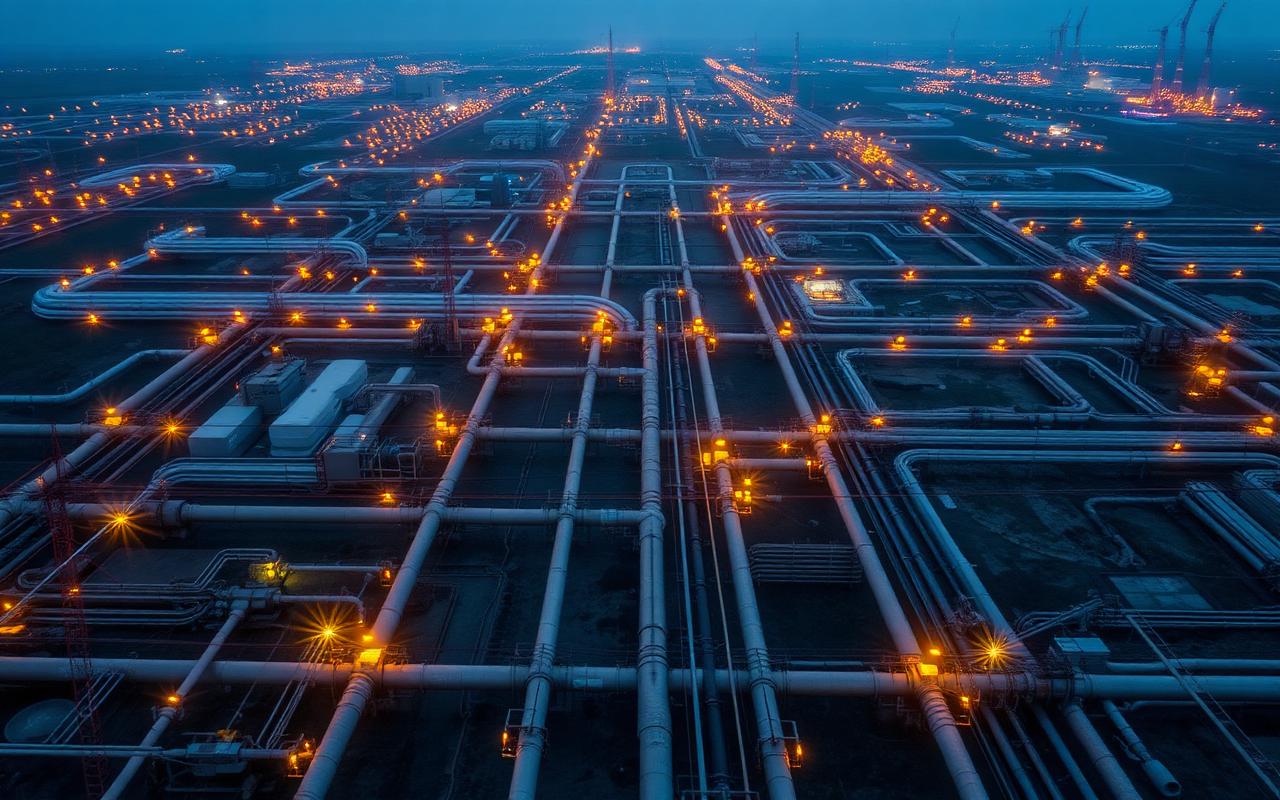
The water management uses of AI that are furthest along address the operational intelligence of systems we already have. Distribution networks in most cities are large, complex, aging things that leak enormous volumes of treated water before it ever reaches anyone's tap. AI that fuses sensor data, historical leak patterns, and pressure modelling can pinpoint where losses are happening and predict where failures will develop, so maintenance can be targeted instead of guessed. Cities running these systems have cut non-revenue water meaningfully, with both financial and environmental savings.
Agriculture is where the biggest efficiency gains are still on the table, because farming uses the majority of global freshwater and the variation in how well that water is used is enormous. AI-powered precision irrigation that pulls in soil moisture data, weather forecasts, crop models, and satellite imagery can deliver water to exactly the right area at the right time. Field trials in water-stressed regions have shown substantial reductions in water use without sacrificing yields. Scaled across global agriculture, that's a real shift in the water footprint of food.
AI is also reshaping water quality monitoring in ways that matter for public health. The conventional model is episodic and slow: samples taken, sent to labs, results returned long after the moment to act has passed. AI on distributed sensor networks can flag contamination as it develops and model how it will spread, giving utilities the lead time to actually intervene. In several recent industrial contamination events, AI monitoring caught anomalies hours before sampling would have.

The nanotechnology side is less familiar to most people, but worth understanding because it's a genuinely different approach to problems conventional engineering can't crack. Nanomaterials operate at scales where the physical and chemical properties of materials are unlike their bulk equivalents, and those unusual properties can be turned into very efficient treatment. Nanoscale membranes with pores that let water through while excluding viruses and dissolved heavy metals are enabling desalination and purification at energy costs well below conventional reverse osmosis. Carbon nanotube filters are removing emerging contaminants like pharmaceuticals and microplastics that standard activated carbon simply cannot catch.
Photocatalytic nanomaterials that can destroy organic contaminants and inactivate pathogens using only sunlight are particularly exciting for low-resource settings, where the absence of electricity has historically made conventional treatment impractical. Systems that combine these materials with simple collection and exposure infrastructure can purify water from a wide range of source qualities using nothing but solar energy, with no consumables and minimal maintenance. Field trials in sub-Saharan Africa and South Asia have shown effective pathogen removal from challenging source water, with systems that can be built and maintained locally.
The most interesting near-term work is at the intersection of the two. AI that can model how nanomaterials behave in messy real-world water, predict treatment performance across varying source conditions, and optimize material design for specific applications is dramatically accelerating development cycles. What used to take years of empirical testing can now be explored computationally, with the most promising candidates pulled out for real-world validation. The gap between lab demonstration and field deployment is shortening, and the technologies that will reach the field in a decade are being built faster because of AI right now.
The most important question about AI and nanotechnology in water isn't whether the technology works. Increasingly, it does. The question is who will have access to it and on what terms, because the map of water insecurity tracks closely with the map of economic and political marginalization, and the history of water technology is not a history of fast or fair diffusion. The most sophisticated AI water management systems are currently deployed in well-resourced utilities in middle and high-income countries. The communities facing the worst insecurity are often the ones least able to reach cutting-edge tools, not because those tools are wrong for the context, but because the path to adoption needs resources and institutions that aren't evenly distributed.
The nanotech approaches most relevant to low-resource settings, especially solar-powered photocatalytic systems and low-energy nanofiltration, are genuine opportunities to deliver effective treatment in places where conventional systems never showed up. Realizing those opportunities takes more than technical development. It takes deliberate attention to cost, durability, local repairability, and implementation support, the practical details that decide whether a technology actually gets used in the communities that need it most. The history of water and sanitation is full of technically sound tools that failed in deployment because those factors got short-changed.
The global water crisis is solvable. Not immediately, not without serious investment and sustained political will, but solvable in the sense that the physical and chemical problems do not exceed what current and near-term technology can handle. What has historically been missing is the combination of effective, affordable, deployable technology with the institutional and financial mechanisms to reach the communities that most need it. AI and nanotechnology are strengthening the first half of that equation in ways that genuinely matter. The second half, the governance and investment piece, remains the harder problem. And no algorithm, however sophisticated, will solve that without the kind of sustained human commitment that has, so far, been the most consistently scarce resource in the whole effort.
Topics in this article
You might also like
View all
Can AI Save the Planet It's Helping to Destroy?
The uncomfortable, two-sided story of AI and climate change.

The AI That May Never Break a Rule
AI can obey every narrow rule and still create harm at a much larger scale.

The Hardest AI Safety Feature Is Saying No
Useful AI completes tasks. Safe AI also needs to know when to refuse.