The Friend Who Has Been Everywhere
AI is quietly changing who gets to travel, and how they get there.
 Sahir Maharaj10 min read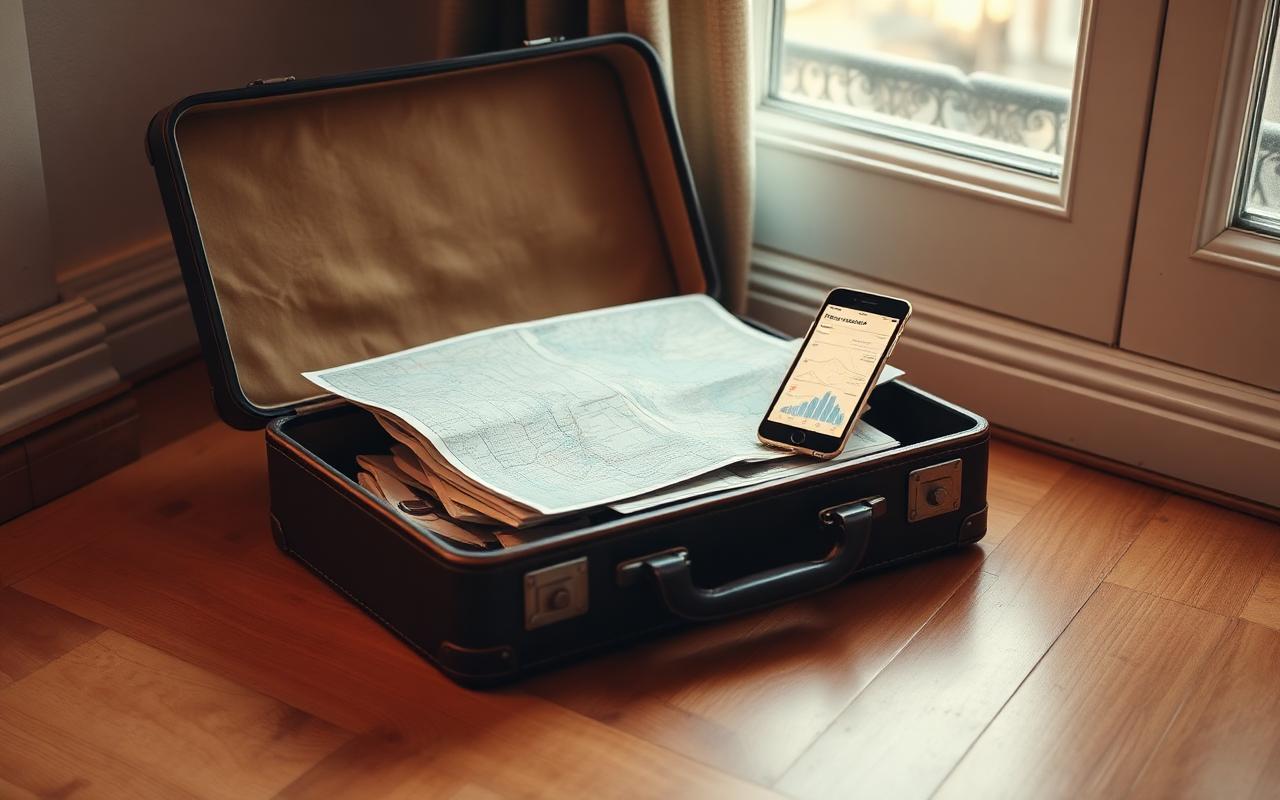
I was on a flight recently, somewhere over the ocean, looking at a travel planning assistant that had just generated a three-week itinerary for a trip I had mentioned wanting to take someday. The itinerary was specific, sensible, beautifully sequenced, and had included a detail I had mentioned only once in passing, that I prefer arriving in a new city by train if there is any option to do so. That detail had shaped two of the transit recommendations. For a moment I just sat there, slightly surprised by how understood I felt by an algorithm, and then I started thinking about what this technology means for the much larger question of who gets to travel and how.
Travel has always been one of the most powerful catalysts for human development available to those who can access it. Encountering places and people genuinely different from the ones you know changes how you understand the world and your place in it. It builds the kind of contextual empathy that abstract information rarely produces. And it has also always been profoundly unequal in its distribution, constrained by money, by physical ability, by passport privilege, by visa regimes, by language barriers, by the sheer complexity of navigating unfamiliar systems in unfamiliar places. AI is not going to eliminate those structural inequalities. But it is changing some of the friction and some of the access in ways worth examining honestly.
The transformation AI is producing in travel is happening across several dimensions: how people plan journeys, how they navigate while travelling, how they overcome language barriers, how they access information about places and experiences, and increasingly, how people who cannot travel physically can access meaningful versions of the experience. Each dimension has both a benefit case and a complication worth examining, and together they paint a picture of an industry being fundamentally redesigned around the capabilities of AI.

Travel planning has historically fallen into two categories that neither serves everyone well. The first is the package tour, which handles complexity by removing choice and producing a standardized experience that fits no individual particularly well. The second is independent research, which offers total flexibility but requires an enormous investment of time and knowledge to do well, meaning the quality of the experience correlates strongly with the traveller's prior familiarity with the destination. AI travel assistants are beginning to offer a third category: personalized planning support that can handle the complexity of independent travel without requiring the traveller to have done it before.
The quality improvement this represents for first-time or infrequent travellers is significant. Understanding which neighbourhoods in an unfamiliar city are safe, vibrant, and accessible for specific mobility requirements, combined with accommodation that fits a defined budget and dietary restrictions, combined with a sequence of experiences that reflects genuine interests rather than generic tourist highlights, used to require either expensive specialist knowledge or a great deal of prior experience. AI assistants can now synthesize that information from vast sources and deliver it in a form that's actually useful for planning.
There is also an accessibility dimension that extends beyond planning. Real-time AI translation has removed one of the most significant barriers to independent travel in unfamiliar language environments. Navigation systems with AI-driven contextual awareness make it easier to move through unfamiliar cities with confidence. AI-powered accessibility platforms are making it easier for travellers with disabilities to identify what is genuinely accessible rather than what is merely listed as accessible, a distinction anyone with mobility requirements will recognize as significant. These tools don't make the world equally accessible to everyone. But they reduce the information asymmetry that makes travelling with specific needs disproportionately difficult.

One of the more interesting and genuinely contested applications of AI in travel is the development of virtual travel experiences for people who cannot access physical travel, whether due to disability, age, financial constraints, or visa and geopolitical barriers. AI-powered virtual reality experiences of destinations, combined with generative tools that can create immersive and contextually rich representations of places, are beginning to offer something more than photographs and video but less than physical presence. The question of what this is worth and to whom does not have a clean answer, but it deserves to be taken more seriously than it usually is in conversations that tend to dismiss virtual travel as a poor substitute for the real thing.
For a ninety-year-old who remembers visiting a city in their youth and can no longer travel, an AI-powered virtual return to those streets, adapted to their memories and interests, may be a profound experience. For someone with severe mobility restrictions who has never been able to access many of the world's most famous places, a richly rendered and interactively navigable virtual version of those spaces provides something genuinely new. The instinct to compare these experiences unfavourably to physical travel is understandable but may reflect a particular kind of privilege: the privilege of being someone for whom physical travel was always a real option. For the people for whom it was not, AI-enabled virtual experiences are not a consolation prize. They are the experience.
There are complications worth acknowledging. Virtual travel, however sophisticated, currently cannot replicate the sensory richness, the spontaneous encounter, or the genuine challenge of being in an unfamiliar physical environment in ways that produce the deepest forms of cross-cultural understanding. The risk that AI-mediated virtual travel produces a curated, sanitized version of places that confirms existing perceptions rather than challenging them is real. The communities whose places are being virtually represented have interests in how that representation is constructed that are not always centred in the design of these tools. These concerns should shape how the technology develops. They do not invalidate the access case for people who have no alternative.

The travel industry is facing a version of the disruption question most industries are facing, but with particular intensity because travel is so deeply human in its motivations. The unique human experiences that AI cannot replicate, genuine spontaneous encounter, the specific texture of a place experienced through all the senses, the relationships that form when two people navigate an unfamiliar situation together, remain powerful and irreplaceable reasons to travel physically. The industry that serves those experiences is not going away. But the parts that existed primarily to manage complexity and information asymmetry, the travel agent who knows which hotels are actually good, the guidebook author who has walked every neighbourhood, are facing genuine disruption from AI tools that can now do much of that work more efficiently.
The more interesting question for the industry is how to use AI to make the irreplaceable parts of travel more accessible and more meaningful rather than just using it to cut costs in the parts of the value chain that are most easily automated. Airlines and hotels that use AI primarily to optimize pricing at the expense of the customer relationship are making a different choice than travel companies that use AI to understand what a particular traveller would find genuinely meaningful and to help create conditions for that experience. Both choices are available, and the variation in how AI is deployed across the sector will produce significant variation in the quality and character of travel experiences in the years ahead.
What gives me genuine optimism about AI and travel is the possibility of a more thoughtful kind of exploration becoming more widely accessible. The traveller who goes somewhere well-prepared, who understands something of its history and culture before arriving, who knows how to be a respectful and curious presence rather than a confused and frustrated one, tends to have better experiences and to contribute more positively to the places they visit. AI tools that lower the preparation barrier, that help people engage with places on more substantive terms, could make the cultural exchange at the heart of good travel more widely available. That is a worthwhile goal, and one the technology, used thoughtfully, is genuinely capable of serving.
Topics in this article
You might also like
View all
The Hardest AI Safety Feature Is Saying No
Useful AI completes tasks. Safe AI also needs to know when to refuse.

AI Is Teaching Us to Accept
Search made us compare sources. AI makes it easy to accept one smooth answer.

The Cognitive Economy of Effort
AI saves mental effort, but some of that effort is how independent judgment grows.