How AI Is Changing the Game
What happens to sports broadcasting when the booth gets an algorithm.
 Sahir Maharaj10 min read
There is a moment in every great broadcast that no algorithm planned. A commentator's voice drops almost involuntarily as a shot curls toward the top corner. The silence before a penalty kick that lasts half a second longer than it should. The laugh that breaks through when something unexpected happens on the field. These are the moments that make sport feel alive, that make it feel like you are watching with someone rather than simply watching. I think about those moments a lot now, because the technology entering the booth does not yet know how to produce them, but it is getting better at almost everything else.
AI in sports commentary is moving along two tracks that are developing at different speeds. The first is data-driven analysis, the augmentation of human commentary with real-time statistical context, predictive modelling, and pattern recognition no human analyst could produce at broadcast speed. The second is synthetic commentary itself, AI-generated voiceover and narrative description that can cover events without a human commentator in the production chain at all. The first is mature and widely deployed. The second is still emerging, still imperfect, and still genuinely controversial. Both are accelerating.
What makes this worth examining carefully is that sports commentary is not just information delivery. It is storytelling. It is the art of giving meaning to physical events in real time, of connecting what is happening on the field to what has happened before, to what it means for the people watching, to the human stakes underneath the scoreline. That is a more complex job than it looks, and AI is approaching it from below, starting with the parts that are most clearly data-driven and working upward toward the parts that require genuine narrative judgment.
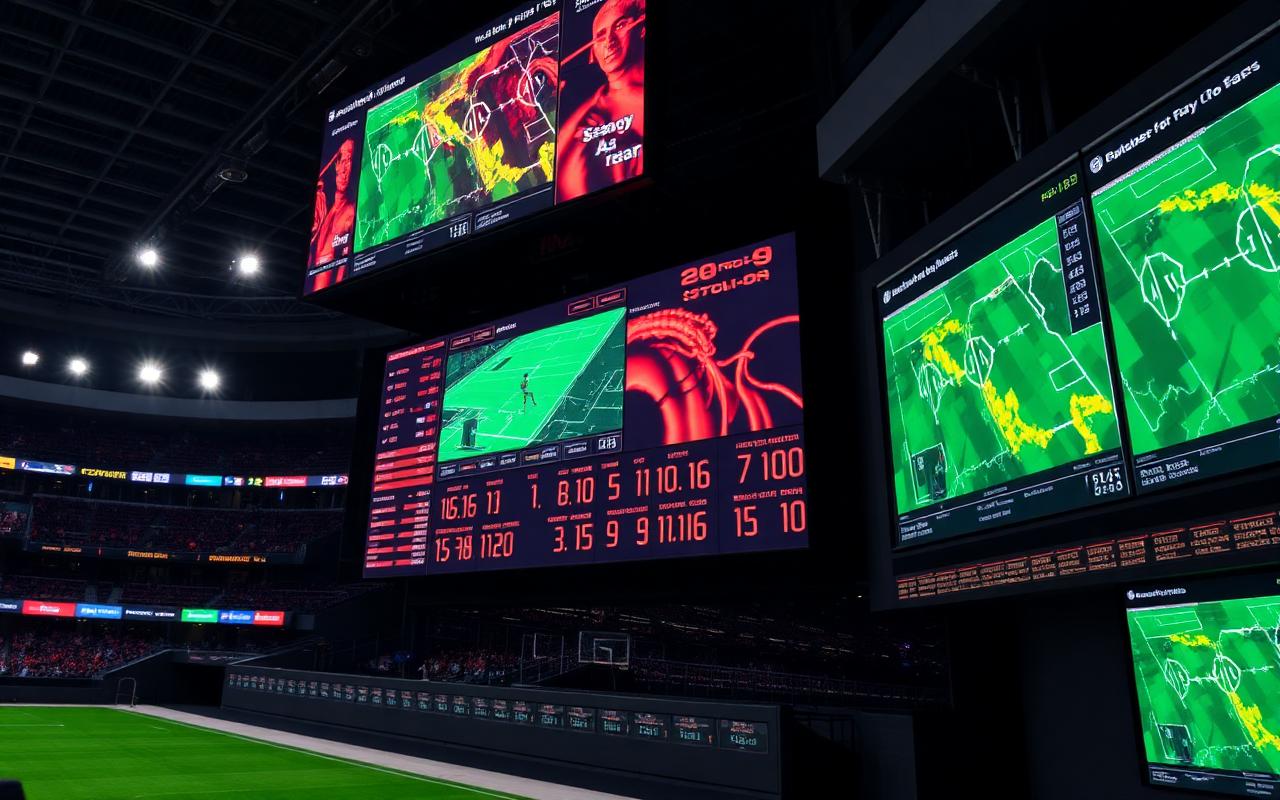
The honest case for AI in commentary starts with the data problem, and it is a real problem. Modern professional sport generates extraordinary volumes of performance data in real time. The best human analysts can draw on a fraction of this during a live broadcast. They rely on preparation, experience, and the trained ability to notice what matters. But there is an enormous amount of contextual information that simply cannot be surfaced quickly enough for a commentator to weave into their call as it becomes relevant. AI systems that process this data in real time and surface what's useful, either to the commentator or directly to the viewer through graphics and overlays, are genuinely enhancing the broadcast in ways that serve the fan.
Broadcasters using AI-powered real-time analytics can contextualize a performance within the full historical record of the competition instantly, tell viewers how unusual a sequence of play is compared to thousands of historical matches, or surface the tactical pattern that explains why one team keeps creating chances. These are things a human analyst could not do from memory alone. They require computational power applied to comprehensive data, and when integrated smoothly they make the commentary genuinely more illuminating without replacing the human intelligence that gives it life.
There is also a real accessibility argument. The rights economics of sport mean that enormous amounts of live sport are broadcast without commentary, particularly at the grassroots level, in minor leagues, and in territories where rights deals haven't been struck. AI commentary that describes the action accurately and contextually, even if it cannot yet match the best human broadcasters for narrative quality, gives those events a broadcast presence they would not otherwise have. For a parent watching their kid's regional competition with the same coverage quality as a major league game, that's a genuine improvement.
Here is what the optimistic case tends to underweight. The best sports commentary is not primarily about information. It is about presence. When a great commentator calls a decisive moment, they are doing something more than describing what happened. They are placing it in a story, connecting it to everything that came before, and expressing a response that helps the audience know how to feel about what they have just witnessed. That is an act of interpretation that draws on cultural knowledge, emotional intelligence, and a relationship with the sport that is built over decades. It is also an act of shared humanity. When a commentator's voice breaks during a moment of sporting drama, the audience feels something because they are watching another human being feel it in real time. That contagion is the core of great broadcasting, and it has no algorithmic equivalent.
There is also the creative language dimension. The phrases that become part of the cultural vocabulary of a sport, the calls that are replayed decades later because they captured something essential, are not the product of data processing. They are the product of a specific human mind, in a specific moment, finding exactly the right words for something unprecedented. AI language models can produce fluent commentary. They can produce commentary that is accurate, contextually rich, and even occasionally inventive. What they cannot reliably produce is the unexpected phrase that perfectly fits a moment that has never happened before, because producing it requires a kind of creative presence that is not yet within their range. The gap may narrow. Right now it is wide enough to matter.
The career implications for sports broadcasters deserve honest acknowledgment. If AI can produce adequate commentary for a significant portion of the content that currently requires human commentators, the economics of broadcast talent change. The top tier will almost certainly stay human because the human dimension is part of the value. But the large middle tier, the commentators who cover second-tier competitions, regional markets, and content audiences will accept with adequate rather than exceptional coverage, faces genuine displacement risk. That deserves to be acknowledged rather than folded into generic optimism about AI creating new opportunities.
The future of sports commentary is almost certainly hybrid, and the interesting question is not whether human and AI commentary will coexist but how the combination should be designed to serve the audience best. The evidence from early experiments suggests AI-generated statistical context and real-time data enrichment make human commentary better when the integration is thoughtful, when the information surfaces at the right moment and in a way that enhances rather than interrupts the narrative flow. The experiments where AI has been less successful are the ones where it has been positioned as a substitute for human presence rather than a supplement to human judgment.
There is also a personalization dimension just beginning to be explored that may turn out to be the most significant change. A broadcast experience that adapts to the individual viewer, offering different levels of technical depth, different languages, different narrative styles, even different commentators matched to personal preference, is technically within reach. For a sport that serves a global audience with genuinely different knowledge levels and cultural contexts, that represents a meaningful expansion of who feels served by the broadcast.
What I keep coming back to is the fan at the centre of this. Sports broadcasting exists to serve the person watching, to enhance the experience of witnessing something extraordinary and to deepen their connection to the sport they love. Everything else, the technology, the economics, the careers, the debates about authenticity, should be evaluated against that standard. AI in sports commentary makes sense where it genuinely enriches the viewing experience. It makes less sense where it is deployed primarily because it is cheaper, at the cost of the human qualities that make great broadcasting genuinely great. That distinction is the right question to ask.
Topics in this article
You might also like
View all
The Internet Is Being Flooded With AI Slop
Near-zero production costs, and what happens to the signal beneath the flood.

The Filter Bubble Finally Burst, or Did It?
AI didn't pop the bubble. It replaced it with something stranger.

Learning to See in an AI World
Computational capture, generative images, and what photography is still for.