The AI Researcher That Never Sleeps
Science just got a tireless colleague.
 Sahir Maharaj5 min read

I want to start with something that is easy to understate: the actual pace at which AI-assisted research is changing specific scientific fields. AlphaFold did not slightly improve protein structure prediction. It essentially solved a problem that had been open for fifty years, in a way that the structural biology community collectively described as transformative in the space of months. In 2022, researchers used AlphaFold-predicted structures to design a drug candidate for Chagas disease in a matter of weeks, a process that had previously taken years. This is what an AI research collaborator without human biological constraints actually produces.
The pharmaceutical research firm Insilico Medicine used AI to identify a novel drug target and develop a clinical candidate in eighteen months, end to end, at a small fraction of the typical cost. Exscientia had a drug candidate designed entirely by AI enter clinical trials. These are not pilot projects or proof-of-concept demonstrations. They are real research outputs that reflect what AI systems can do when given access to domain knowledge, computational resources, and the freedom to run many iterations quickly.
The comparison to a human researcher that never sleeps is not quite right, actually. It undersells the advantage. A human researcher who never slept would be exhausted and cognitively impaired within days. An AI research system that runs continuously improves its performance because each experiment generates data that informs the next one. The compounding effect over time is qualitatively different from a tireless human. It is a system that gets better as it runs, constrained mainly by the quality of its training and the richness of the problem space it is exploring.

I will be direct about something that a lot of AI-in-science commentary avoids: AI research systems of the kind being developed now are not primarily complementary to human researchers. They are, in a meaningful sense, competitive with certain categories of human research work. A system that can generate and test thousands of drug candidates in the time a human team takes to test dozens is not a tool that makes human drug discovery researchers more productive. It is a system that reduces how many human drug discovery researchers are needed for a given research output.
This does not mean human researchers become obsolete. It means the nature of valuable human research contribution changes, in ways that some researchers will find exciting and others will find threatening. The highest-value human contributions shift toward problem framing, which requires the kind of intuition about what is worth asking that current AI systems lack; toward interpretation, which requires the contextual and interdisciplinary understanding that AI handles inconsistently; and toward governance and ethics, which requires human judgment about what should be built and deployed rather than just what can be.
What the transition looks like in practice is probably not a dramatic replacement event but a gradual repricing of research labor: tasks that AI systems can do well become less valuable as human contributions, and the humans who can do the tasks AI systems cannot do well become more valuable. This is uncomfortable for people whose training focused on the automatable tasks, and it is worth being honest about rather than softening with reassurances about how AI will only augment rather than replace human research work.

The scientific community's response to AI research systems has been a mixture of enthusiasm, skepticism, and denial, in roughly that order depending on the field. Structural biologists were broadly enthusiastic about AlphaFold, recognizing a tool that solved a problem they cared about and enabled research directions that were previously blocked. Some organic chemists have been skeptical of AI-designed synthesis routes, pointing to cases where AI systems produced routes that looked plausible on paper but failed in practice. Psychologists have raised concerns about AI-generated research findings contributing to the already-problematic replication crisis.
The more interesting response, to me, is from early-career researchers who are navigating a job market where the research skills they spent years developing are being automated in real time. The PhD student who trained for five years to do the kind of data analysis that an AI system can now do in an afternoon is in an objectively difficult position, and I think the scientific community has not fully reckoned with what it owes those researchers in terms of honest guidance about how their skills and their careers will need to evolve.
The institutions that are thinking ahead are the ones reframing what a research career looks like in an AI-assisted world: what skills remain valuable, how to train for them, and what the relationship between human and AI research contributions looks like in a healthy division of labor. That framing is not fully worked out yet. The honest answer is that the scientific community is figuring this out in real time, and the people doing it most thoughtfully are the ones who are treating AI as something that changes the nature of research rather than just the tools available for it.
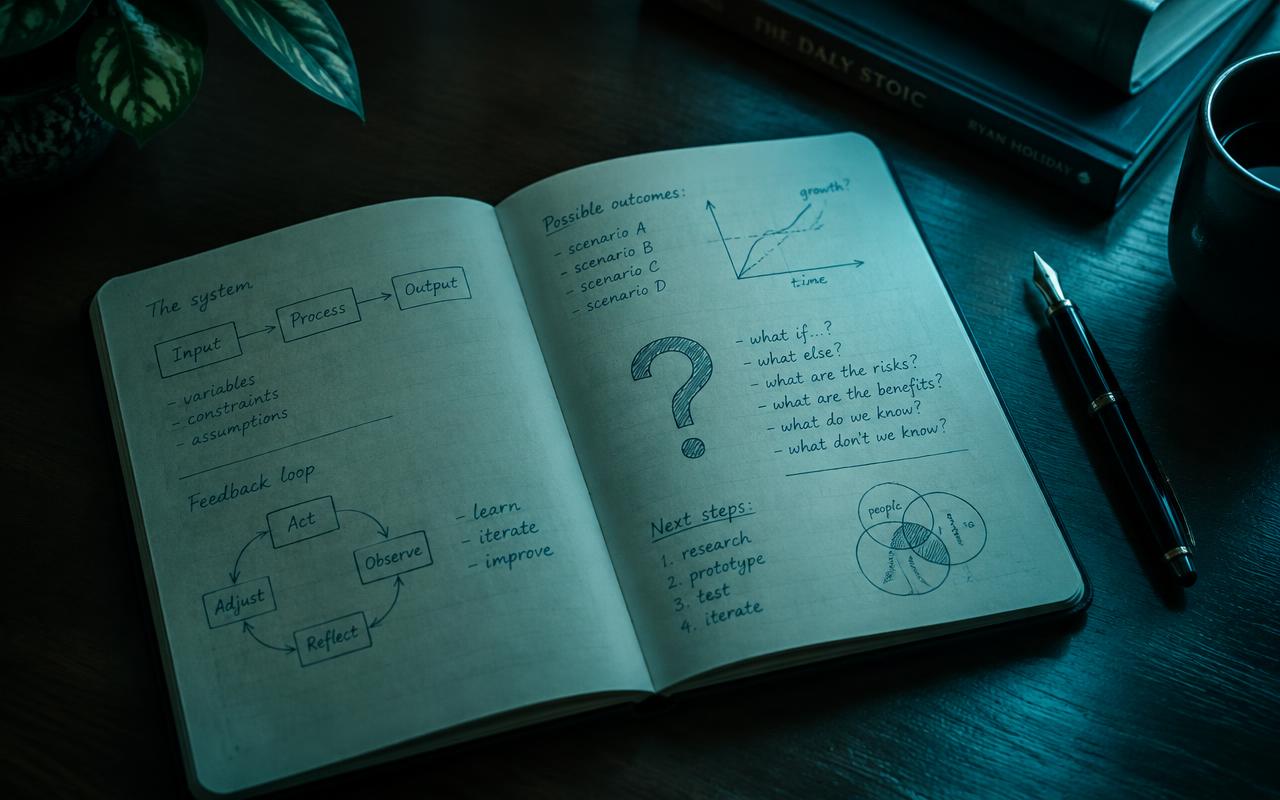
There is a version of the AI researcher story that ends with human researchers made redundant, and I do not think that is the most likely version. But I also do not think the reassuring version, where everything is simply augmented and nobody is displaced, is fully honest. The version I find most plausible is one where human research contributions matter enormously for things the current generation of AI systems is genuinely bad at, and matter much less for things they are genuinely good at.
AI research systems are currently good at searching large spaces efficiently, at pattern matching across large datasets, at executing well-defined research protocols with speed and consistency. They are not good at deciding which questions are worth asking, at integrating the kind of anomalous observation that does not fit existing frameworks into a genuinely new understanding, at the social and collaborative dimensions of research that drive how findings are communicated and built on, or at the ethical judgment about which research directions should be pursued given their potential consequences.
Those human contributions are real and important, and they are likely to remain valuable even as AI systems become more capable at the technical aspects of research. The researchers and institutions that position themselves around those contributions, that invest in the judgment, creativity, and ethical reasoning that AI cannot replicate, are the ones that will find the AI research revolution empowering rather than threatening. That is not a guarantee of stability for everyone. It is an honest description of where the value is shifting, and what it takes to be on the right side of that shift.
You might also like
View all
Could AI Be Our Last Invention?
It's closer to a plan than a myth.

When AI Outpaces Human Timelines
Progress may stop waiting for us.

The AI That Rewrote Itself Seven Times
Which version did you approve?