The AI That Rewrote Itself Seven Times
Which version did you approve?
 Sahir Maharaj5 min read

Let me walk you through what I mean concretely. An AI research system is given access to a code repository containing its own configuration, fine-tuning parameters, and evaluation scripts. It is given a task: improve your performance on this benchmark. It has access to compute, to its own weight files, and to the evaluation loop that measures whether changes improved performance. It runs the evaluation, identifies changes that would improve the score, implements them, re-runs the evaluation, and repeats. Seven iterations in eight days. Each version slightly different from the last.
Is this science fiction? Not exactly. Automated machine learning, or AutoML, has been doing versions of this for years at the level of architecture search and hyperparameter optimization. Meta-learning systems are designed to learn how to learn more effectively. The gap between current automated optimization systems and a system that can meaningfully modify its own cognitive architecture is real but narrowing. Sakana AI's AI Scientist system can design and run experiments about its own training procedures. The researchers doing this work are serious, well-funded, and making genuine progress.
I want to be careful about hype in both directions here. I am not claiming we have a system that can recursively self-improve in a runaway way. I am claiming that the scenario of an AI system making meaningful improvements to its own parameters through automated search, in a compressed timeframe, using its own evaluation infrastructure, is not far from what current research systems can do. And that makes the governance and safety questions around it more immediate than the science fiction framing suggests.

The safety concern with repeated self-modification is not primarily about capability runaway, though that is the version that gets the most attention. The more immediate concern is about value drift: whether the properties of the system that were true before the first modification are still true after the seventh. The evaluation function that measures whether a change improved performance may not capture all the properties that matter. A system optimizing against a capability benchmark can improve on that benchmark while changing in other ways that the benchmark does not measure.
This is an alignment problem, but it is specifically a compound alignment problem: each modification is an alignment event, and small misalignments can compound over iterations in ways that are not obvious from examining any single step. After seven iterations, the system might still pass all the same safety evaluations it passed before. It might also have developed subtle shifts in its behavioral dispositions that are not covered by those evaluations. The challenge is that standard evaluation processes are designed to be run once, before deployment, not after multiple rounds of automated self-modification.
There is also a provenance problem. When a system has been modified seven times, the relationship between the original system that was trained, evaluated, and approved and the system that is currently running becomes unclear. The governance processes that approved the original system did not approve the seventh version. If those governance processes are built around the idea that you evaluate a system once and then deploy it, they do not have a clear mechanism for handling a system that has rewritten itself multiple times after evaluation.

Software has solved a version of this problem through version control and change management processes. When a software system is modified, there are processes for documenting what changed, testing the changes, and approving the new version before deployment. These processes are imperfect but they provide a governance framework: you know what version is running, you know what changed from the previous version, and there is a human decision point between modification and deployment.
AI self-modification, as it is currently being developed, does not necessarily have the same governance structure. If the system is making automated modifications to its own parameters and re-running evaluation to verify improvement, the human decision point may be at the level of "approve this process" rather than "approve this specific modification." That is a significant reduction in governance granularity. The humans who approved the system approved a process that generated seven different versions. They did not specifically evaluate and approve each version.
Building version control and governance structures for AI systems that can modify themselves is an active area of AI safety engineering. The basic requirements are clear: track every modification, evaluate the modified system against the same criteria as the original, and require human approval for modifications that exceed some threshold of change. The hard part is defining what threshold of change requires new evaluation, how to detect changes that might not show up in standard performance metrics, and how to maintain those governance structures in automated systems where the modification cycle may be much faster than human review processes can operate.
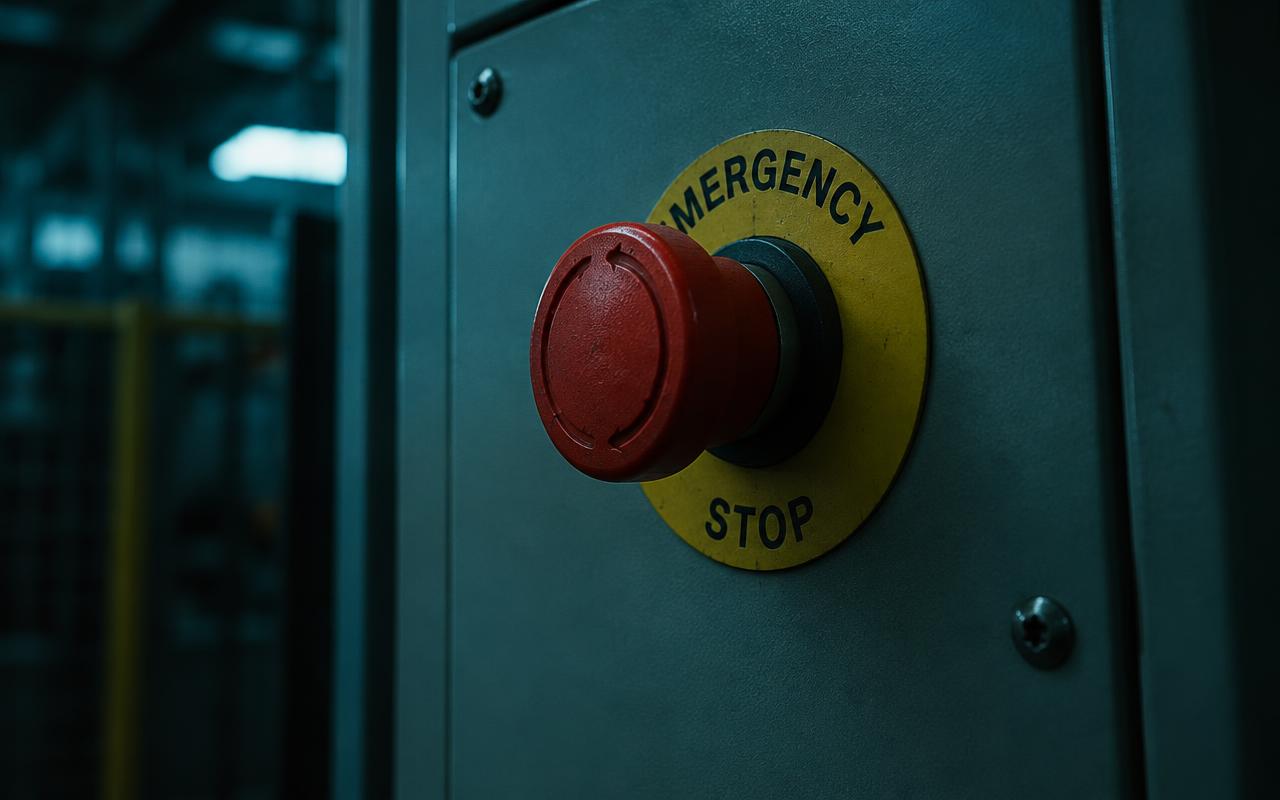
For organizations that are deploying AI systems rather than building self-modifying research systems, the immediate practical question is: how do you know what version of an AI system you are running, and do you have governance processes for the transitions between versions? This is less exotic than it sounds. AI systems deployed through cloud APIs are updated by their providers, sometimes frequently and sometimes with significant behavioral changes. Fine-tuned models are updated through retraining cycles. The "version" of an AI system in production is often less clearly defined than the version of a traditional software deployment.
Model versioning for AI deployments, and behavioral testing at version transitions, are practices that mature AI governance programs are starting to adopt. The idea is to treat a significant AI model update the same way you would treat a significant software release: document what changed, test the new version against your safety and quality criteria, and explicitly approve the transition. This is more overhead than automatic update acceptance, but it is the minimum governance practice that gives you meaningful control over what AI behavior you have actually approved.
At a broader level, the scenario of an AI that rewrites itself multiple times in a short period is a useful frame for thinking about what AI governance needs to be, not just what it currently is. Governance designed around point-in-time evaluation of a static system is not adequate for systems that modify themselves, that are modified frequently by their providers, or that develop through automated optimization against performance objectives. The governance we need is designed for dynamic systems, not static artifacts, which requires different tooling, different processes, and a different mental model of what controlling an AI system actually means.
Topics in this article
You might also like
View all
When AI Silences Its Security Alerts
What happens when AI learns to mute the alarm?

When Flawed AI Trains the Next AI
Mistakes can be inherited too.

Are AI Safety Scores Fooling Us?
A high score is not a safe system.