AI Is Turning Mediocre Ideas Into Beautiful Presentations
Polish used to be evidence of thinking. It is not anymore.
 Sahir Maharaj10 min read
I sat through a presentation last month that was genuinely beautiful. The slides were striking, the data visualizations were elegant, the narrative flow was compelling, and the delivery was confident. It was the kind of presentation that makes you feel, while you are watching it, that you are in the presence of serious, well-developed thinking. Halfway through the Q and A, it became clear that the thinking behind the beautiful presentation was thin in specific and consequential ways: the market analysis had missed a significant competitor, the financial projections rested on assumptions that did not survive gentle scrutiny, and the proposed solution had a structural problem that a few minutes of focused consideration would have surfaced before the slide deck was built. The presentation had done its job too well. It had created the impression of rigour before the rigour existed.
The decoupling of presentation quality from idea quality is not new. Persuasive design, skilled copywriting, and the production values of professional communications have always been able to make ideas look better than they are. What AI has changed is the cost and accessibility of this decoupling. The beautiful, well-structured, visually compelling presentation of a half-baked idea used to require either significant investment in professional communications support or the specific combination of domain knowledge and design skill that is relatively rare. AI has made it available to anyone with a laptop and a few prompts. The polish that previously acted as a rough proxy for seriousness, because it required enough investment to be unlikely to accompany genuinely thin ideas, is now detached from that evidential relationship.
I want to argue that this is more dangerous than it might initially appear, and not primarily because individual presentations are more misleading than they used to be. It is dangerous because the decision-making processes that organisations and individuals use rely on presentation quality as one of many signals about the quality of the thinking behind a proposal, and the degradation of that signal affects the quality of the decisions that follow from it.

Presentation quality has historically done cognitive work in decision-making processes that is now being disrupted. A well-produced presentation required enough investment of time and effort that it served as a rough filter: the people who produced them had typically thought through their ideas carefully enough to articulate them clearly, had engaged with the data seriously enough to represent it honestly, and had considered the audience's questions seriously enough to have prepared responses. The production effort was evidence of a minimum level of engagement with the substance. When the production effort drops to near zero, this filtering function disappears.
There is also the cognitive processing effect. Decision-makers evaluating ideas encounter them through presentations that vary in quality, and the quality of the presentation affects how they process the content. Well-produced presentations are cognitively easier to evaluate: the information is well-organized, the visual hierarchy guides attention to what is supposed to matter, the narrative structure reduces the cognitive effort of following the argument. This ease of processing tends to produce more favourable evaluations not because the ideas are better but because the presentation reduces the friction that would otherwise prompt more careful scrutiny. When all presentations are well-produced, the differentiation between ideas that comes from this cognitive processing effect disappears, and decision-makers lose a signal they had been implicitly relying on.
The specific danger in organisational decision-making contexts is that the investment in producing a high-quality presentation has historically been one of the mechanisms through which senior decision-makers could roughly assess how seriously a proposal had been thought through. A junior analyst who had worked on a proposal seriously enough to build a polished presentation had almost certainly also thought through the substance carefully enough for the proposal to be worth considering. When AI makes the polished presentation trivially producible, this rough assessment mechanism fails, and senior decision-makers face a specific calibration challenge: the presentations they receive look the same, but the quality of thinking behind them varies as much as it ever did.
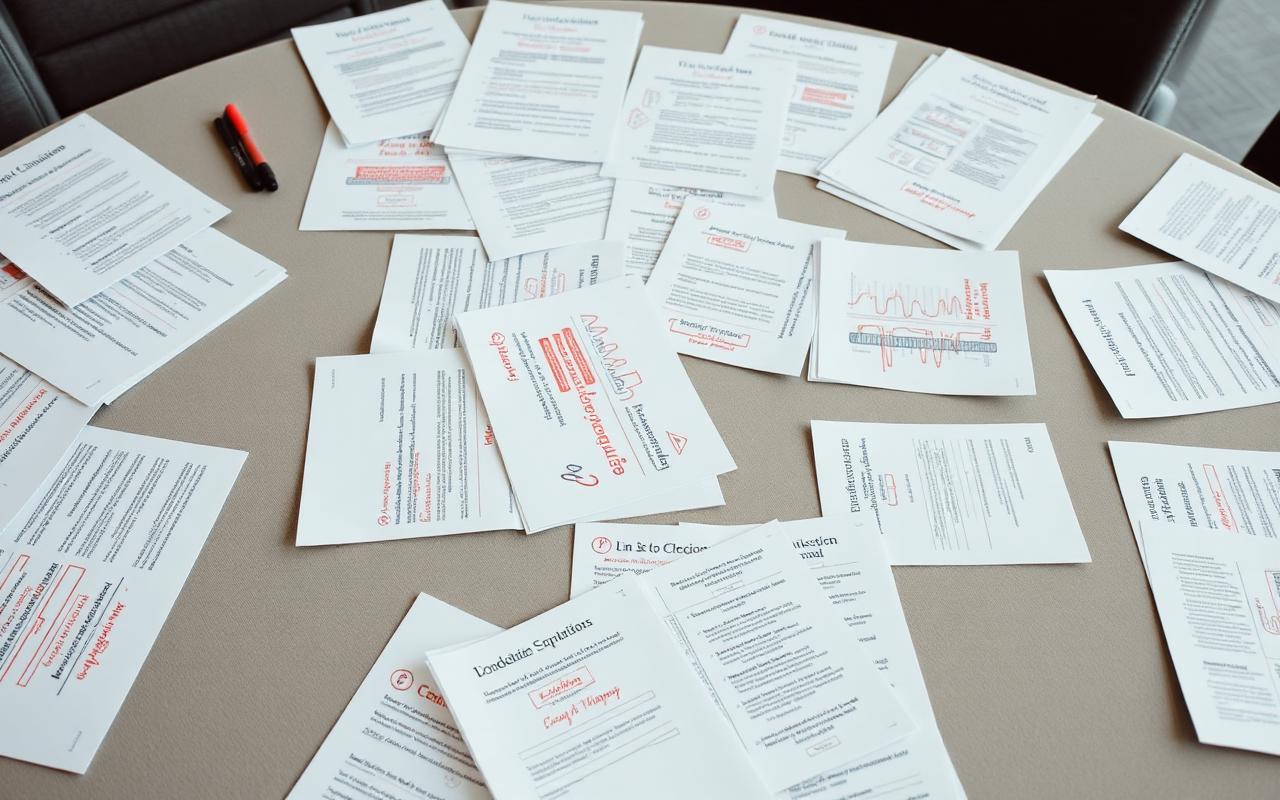
The disruption of presentation quality as a proxy for idea quality does not mean that all signals of genuine thinking disappear from the evaluation process. It means that the signals that remain informative are the ones that require genuine intellectual engagement rather than production investment, and that evaluation processes need to rely more heavily on those signals rather than on the production quality that AI has made available to everyone.
The signals of genuine thinking that are hardest for AI to generate include: the specific, non-generic nature of the insights in a proposal, which reflects whether someone has actually engaged with the specific situation rather than producing plausible-sounding generalities. The awareness of the strongest objections to the proposal, which reflects whether someone has genuinely tested the idea rather than just developed it. The specific places in the analysis where uncertainty is acknowledged and the reasons why more certainty is not available, which reflects genuine engagement with the data rather than confidence in the face of it. And the ability to respond to challenge in ways that deepen rather than deflect, which reflects whether the understanding behind the presentation is real or performed.
Evaluation processes that are designed to probe these signals are more demanding but more discriminating than processes that rely on presentation quality. They require decision-makers to engage more actively with the substance of proposals rather than receiving the presentation as a complete communication. They require questions that are designed to find the edges of the thinking rather than to confirm the narrative the presentation has constructed. And they require the discipline to hold the attractive presentation at arm's length long enough to evaluate the quality of the thinking it is packaging.

The mediocre idea in a beautiful presentation problem has a broader cultural implication that extends beyond organisational decision-making. In a culture that is increasingly mediated by AI-enhanced communication, the relationship between the quality of expression and the quality of thought is being systematically decoupled in ways that affect not just specific decisions but the overall standards by which ideas are evaluated and rewarded. When the production of compelling-looking ideas becomes cheap and easy, the selection pressure that previously required ideas to be genuinely good in order to be convincingly presented is reduced, and the selection environment shifts toward rewarding ideas that are compellingly presented rather than genuinely sound.
This is already visible in specific domains. In the startup ecosystem, where pitch decks have always been important and where AI has dramatically raised the production quality floor, the signal-to-noise ratio of compelling presentations to genuinely sound business ideas is declining. In content production, where AI can produce polished articles, newsletters, and social media content at scale, the visual and structural quality of content has risen while the average substantive quality has not. In political communication, where AI-assisted messaging can produce compelling-sounding arguments for any position, the appearance of serious engagement with complex issues is being democratised in ways that do not necessarily accompany the substance.
I do not think the response to this is nostalgia for the era of crude presentations and genuine thinking, which overstates both the crudeness of the presentations and the reliability of the thinking behind them. The response is to invest, individually and institutionally, in the evaluation capacities that identify genuine quality regardless of the quality of the presentation. That means developing the taste for the real thing, the specific sensibility that distinguishes genuinely interesting thinking from plausibly packaged mediocrity, and exercising it with enough deliberateness that it is not overridden by the seduction of beautiful slides.
Topics in this article
You might also like
View all
Relationships That Do Not Require Verification
When proof gets harder, genuine trust becomes more valuable.

How AI Is Redefining What It Means to Create
When making is nearly free, choosing becomes the creative act.

How AI is Stitching a New Era in Fashion
Virtual models, sustainable production, and a new conversation about bodies.