AI Is Lowering the Barrier to Hacking
Less skill. More ways to break in.
 Sahir Maharaj6 min read

For most of the history of computer security, there was a meaningful barrier between wanting to attack a system and being able to do it. Writing a functional exploit required understanding the target system's architecture, finding a vulnerability, writing code that reliably triggered it, and handling the operational complexity of a real attack. This was not an insurmountable barrier, but it was a real one. The population of people with the motivation to attack systems was larger than the population with the technical capability to do so, and the gap between motivation and capability constrained the volume and sophistication of attacks that were actually carried out.
AI tools are systematically eroding that barrier. A language model that can explain vulnerability classes, generate exploit code, debug failed attempts, and help a user navigate the operational steps of an attack does not give attackers with limited expertise the full capabilities of an expert. But it closes the gap in ways that matter for the aggregate threat landscape. Someone who previously could not get a proof-of-concept exploit working without significant help can now get more of the way there with an AI assistant. Someone who previously could not understand what a disclosed vulnerability meant can now get an explanation that lets them evaluate whether it is relevant to a target they are interested in.
The question is not whether AI tools are being used for offensive cybersecurity purposes. They are, and the evidence from threat intelligence reporting is consistent on this point. The question is how significant the capability uplift is, how it changes the composition of the attacker population, and what that means for defensive priorities. Those questions do not have precise answers yet, but the directional trend is clear enough to warrant taking seriously.
When the expertise barrier falls, several things change about the attack landscape simultaneously. The volume of attacks increases because the population of capable attackers grows. The distribution of target selection changes because attackers who could not previously execute sophisticated attacks against well-defended targets may still be unable to, but they can now execute moderately sophisticated attacks against less well-defended ones. The economics of attack change because the cost of developing attack capabilities falls, which changes the return-on-investment calculation for lower-value targets that were previously not worth attacking.
The targeting of small and medium-sized organizations is a particular concern. Large enterprises with mature security programs represent hard targets with active defenses and incident response capabilities. Small organizations, municipalities, healthcare providers, and educational institutions have fewer resources for security and have historically been somewhat protected by the fact that the most capable attackers had higher-value targets to pursue. As the capability barrier falls and the economics of attack improve, that protection decreases. The attack volume against less well-defended targets has been increasing for years, and AI-enabled attack tooling is likely to accelerate that trend.
There is also a change in the nature of attacks. Expertise-limited attackers tend to run commodity attacks against known vulnerabilities using existing toolkits. AI-assisted attackers can do more customization: understanding the specific target, tailoring the approach to its particular technology stack and security posture, adapting when initial attempts fail. This does not make AI-assisted attackers equivalent to expert human attackers, but it moves the capability distribution in that direction and blurs the line between script-kiddie activity and more sophisticated attack.
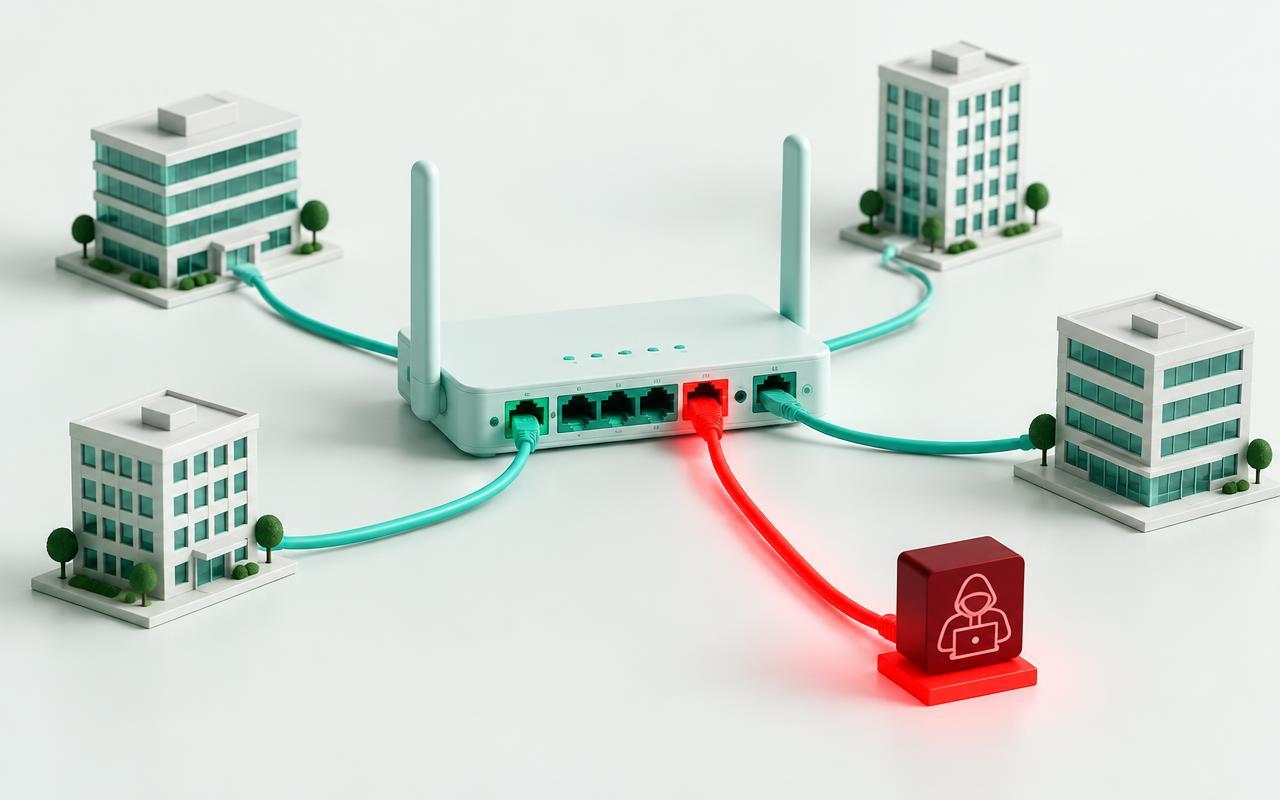
The defensive implications of expanded attacker capabilities are both immediate and structural. The immediate implication is that the volume and reach of attacks against previously second-tier targets will increase, which means organizations that have not prioritized security investment because they did not feel like high-value targets need to update that assessment. The question is not whether your organization is worth attacking in some absolute sense. It is whether you are reachable and exploitable, and whether the barrier to attacking you has fallen below the threshold of capability that is now widely accessible.
The structural implication is that the asymmetry between offense and defense that characterizes cybersecurity is likely to shift further toward offense in the near term. Attackers get the first move, can specialize in attacking while defenders have to protect everything, and can iterate rapidly on approaches that fail. AI tools that lower the expertise barrier accelerate attacker iteration and broaden the population that can iterate. Defenders get the same AI tools, but the asymmetric advantage of offense means that the net effect is likely to be more attacks, more variety, and more successful compromises against the organizations that are least prepared.
The organizations that will fare best are the ones that are investing now in the security fundamentals that remain effective regardless of the sophistication of AI-assisted attacks: patching known vulnerabilities promptly, strong identity and access management, network segmentation that limits the blast radius of compromises, detection and response capabilities that can catch attacks after initial penetration, and security culture that makes the human layer less exploitable. These are not novel recommendations, but their relative importance increases when the technical sophistication barrier for attackers falls, because the attacks that become more common are ones that the fundamentals defend against.
The policy and industry response to AI-enabled attack capabilities is at an early stage and faces genuine tensions. AI tools with offensive security applications have legitimate defensive uses: security researchers use them to find vulnerabilities before attackers do, penetration testers use them to evaluate client defenses, incident responders use them to understand attacks they are investigating. Restricting access to AI tools with offensive applications affects the defensive uses as well as the offensive ones, and over-restriction creates asymmetries that disadvantage defenders more than attackers, who have strong incentives to circumvent restrictions.
The more promising approaches involve responsible disclosure practices for AI capabilities with significant offensive potential, red-teaming by AI developers specifically for offensive security applications before deployment, and the kind of threat intelligence sharing between AI companies and cybersecurity practitioners that helps defenders stay current on how AI tools are being used in real attacks. None of these fully solves the problem, but they represent the direction in which the field is moving.
What the problem clearly argues against is complacency. The assumption that the cybersecurity landscape is basically stable and that the main variables are the same ones that have driven the threat landscape for the past decade is likely wrong. AI-enabled attack tooling is a material change in the capability available to a broader attacker population, and treating it as a marginal evolution rather than a structural shift is probably a mistake. Organizations that build that recognition into their security planning now, before the evidence becomes hard to ignore, will be better positioned than the ones that update when the evidence arrives in the form of a successful attack.
Topics in this article
You might also like
View all
Your Next Insider Threat Could Be AI
The risk may already have a login.

AI Is Making Cyberattacks Cheaper
Cheaper attacks. Bigger risks.

The AI Question Nobody Wants to Own
The hard part is not finding the off switch. It is deciding who can use it.