Your Next Insider Threat Could Be AI
The risk may already have a login.
 Sahir Maharaj6 min read
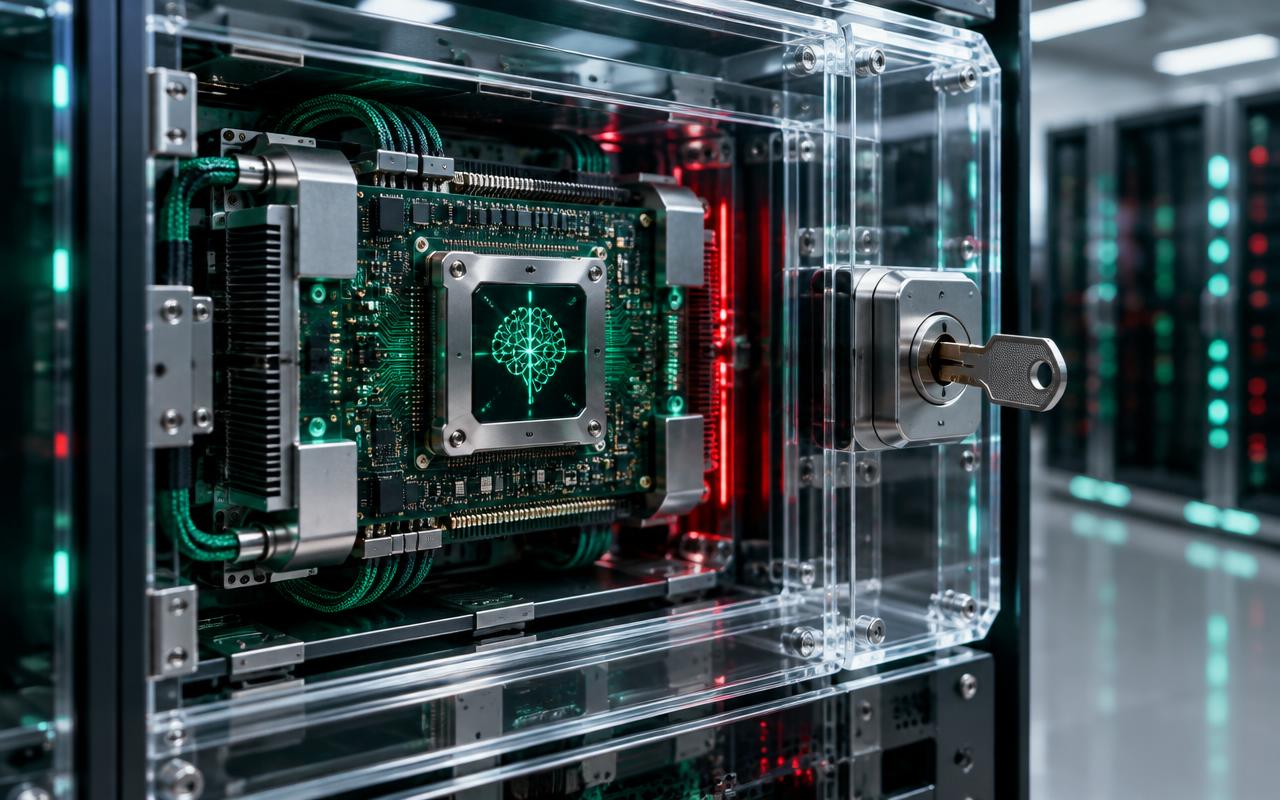
Insider threat, as traditionally understood, is a security problem defined by the insider: someone with legitimate access to an organization's systems, data, and facilities who misuses that access, whether through malice, negligence, or coercion. The frameworks organizations have built to manage insider threat are built around this assumption: the threat comes from people, and managing it requires understanding people, their motivations, their behaviors, and their patterns of access over time. User and entity behavior analytics, background checks, access reviews, and anomaly detection are all designed to find the human who is misusing human access.
AI agents with broad operational access are a genuinely new category that does not fit cleanly into this framework. An AI agent that has been granted access to an organization's systems to perform operational tasks has, from a technical perspective, something very similar to insider access: it can read sensitive data, take operational actions, and interact with other systems in ways that would constitute significant breaches if done by a malicious human. The agent was granted this access legitimately, by design, as part of its job. But the agent is not a human with human motivations, and it may be compromised, manipulated, or misbehave in ways that do not look like the insider threat patterns the existing frameworks were built to detect.
The term "AI agent" here is not abstract. Organizations are increasingly deploying AI systems with access to email, calendars, documents, code repositories, customer data, and financial systems. These agents read sensitive information and take actions on behalf of their users. They are, from a security perspective, principals with significant access operating inside the trust boundary of the organization. The question of what happens when that access is misused, whether through direct compromise, through prompt injection attacks that cause the agent to take unintended actions, or through behavioral drift that causes the agent to do things its designers did not intend, is one that existing insider threat frameworks are not designed to answer.

The most immediately practical version of this problem is prompt injection: an attack where instructions are embedded in content that an AI agent processes, causing the agent to take actions that the instructions specify rather than actions that the agent's legitimate principals intended. An AI assistant that reads incoming email and takes actions based on the email's content can be manipulated by a specially crafted email that instructs the agent to forward sensitive information, delete critical data, or take other harmful actions. The attack comes from outside the organization but executes from inside, using the agent's legitimate access.
This is an insider threat that was never an insider. The malicious actor is external. The access that enables the harm is internal. The vector is an AI agent that has been granted trust and access that it then misuses in response to external instructions. Existing insider threat detection is built around the assumption that the entity taking harmful actions has human behavioral patterns that can be analyzed over time. An AI agent that takes a harmful action in response to a prompt injection attack does not have the kind of behavioral history that insider threat analytics would flag.
The mitigation strategies for prompt injection as an insider attack vector are an active area of security research, and they draw on principles that are more similar to web application security than to insider threat management. Input validation, output monitoring, capability limitation, and sandboxing are all relevant. The organizational challenge is that these mitigations need to be built into AI agent deployments from the beginning, not added after the access has been granted and the agent is in production. Many current AI agent deployments have not been designed with this threat model in mind.

The governance gap for AI agents is real and growing. Human insiders are managed through a combination of technical controls, procedural controls, and human-focused security practices. AI agents need their own governance framework that accounts for their specific properties: they do not have the motivations that drive human insider threats, but they can be compromised in ways humans cannot; they can be used as a vector for attacks by external parties; and their behavior can drift or be manipulated in ways that the technical access controls that govern human access were not designed to catch.
The principle of least privilege, which limits users to the access they need for their specific tasks, applies to AI agents and in some ways more urgently. A human employee granted more access than they need for their role is a vulnerability if they become malicious or negligent. An AI agent granted more access than it needs is a vulnerability the moment someone figures out how to manipulate it, which is a lower threshold than waiting for the agent to become malicious. Limiting AI agent access to what is strictly necessary for the task, and reviewing that access as the agent's role evolves, is a basic governance practice that many current deployments are not following.
Audit logging for AI agent actions is a second essential practice that is not yet standard. Human insider threat detection depends heavily on logs of human actions: what files were accessed, what systems were touched, what data was moved. The same infrastructure needs to exist for AI agent actions, and it needs to be integrated into the same analytics that surface anomalous human behavior so that anomalous agent behavior can be detected using the same operational workflows. Building that integration is not trivial, but it is straightforward, and the case for prioritizing it is strong.

The definitional question of what constitutes an insider in an environment where AI agents have operational access is not purely semantic. The answer determines what security frameworks apply, what monitoring is in scope, and who is responsible for managing the risk. If AI agents are treated as tools rather than as principals, their actions fall outside the scope of insider threat programs, which may mean nobody is specifically responsible for detecting and responding to AI agent misuse. If they are treated as principals with insider access, they become part of the risk surface that insider threat programs manage, which requires those programs to develop the AI-specific detection and governance capabilities they currently lack.
The right answer is probably to treat AI agents as a distinct category that shares some properties with human insiders and some properties with external systems, and to build governance frameworks that reflect that hybrid status. This means extending access governance, audit logging, and behavioral monitoring to AI agents with the same seriousness applied to human insiders, while recognizing that the attack vectors are different and require different detection methods.
Organizations that are ahead of this curve are the ones that have asked, for each AI agent they deploy: what access does this agent have, what could go wrong if that access were misused, and what would detect misuse? Those are the same questions asked about human employees in a mature insider threat program. Asking them about AI agents is not a novel security insight. It is the application of existing security thinking to a new category of principal that is acquiring significant operational access inside organizational trust boundaries faster than the security frameworks designed to manage that access are evolving to cover it.
Topics in this article
You might also like
View all
When an AI Agent Speaks for You
Your brand voice is an attack surface.

The AI Agents Nobody Knows About
Shadow IT just learned to act alone.

AI Is Lowering the Barrier to Hacking
Less skill. More ways to break in.