Does AI Need a Black Box Recorder?
When AI goes wrong, we need more than guesswork.
 Sahir Maharaj6 min read
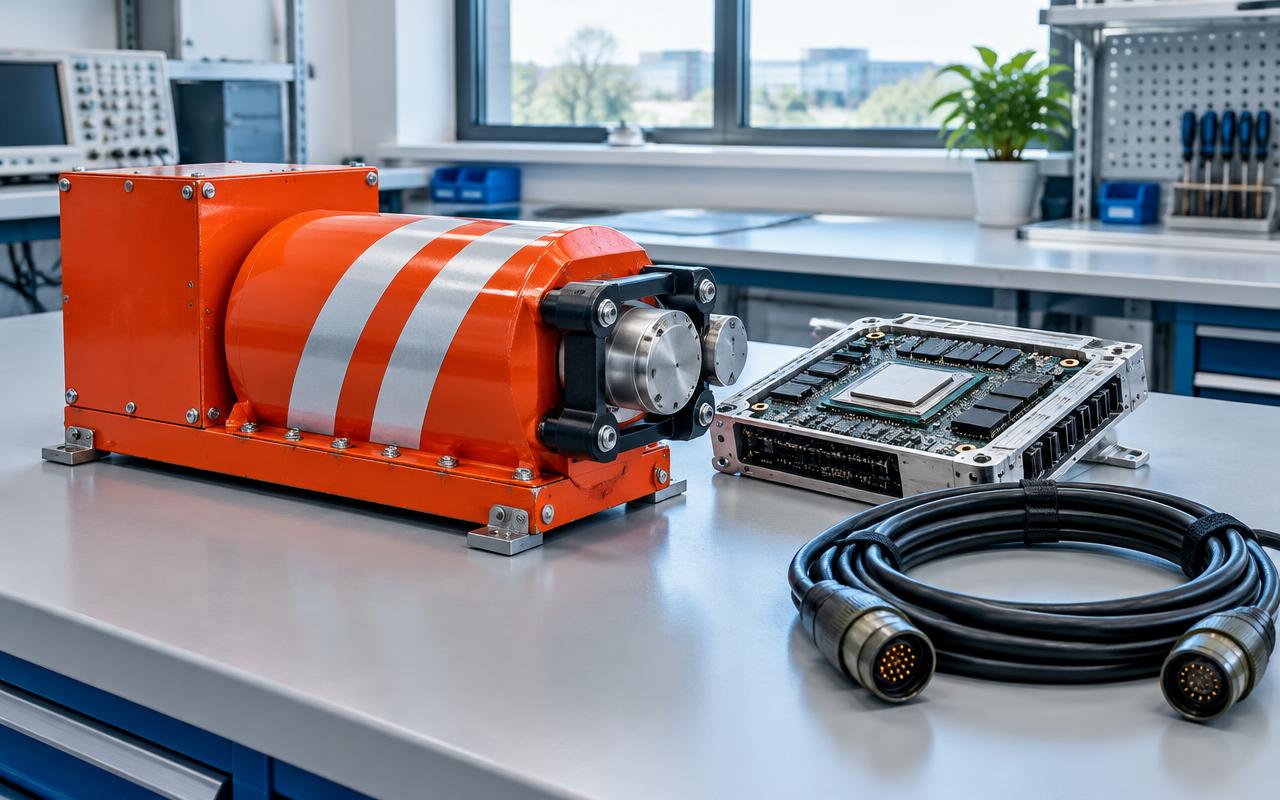
The flight data recorder and cockpit voice recorder, together known as the black box, were not designed with the goal of assigning blame after accidents. They were designed with the goal of understanding them. Aviation safety culture recognized early that you cannot improve what you cannot measure, and that accident investigation without detailed data about what actually happened is guesswork dressed up as analysis. The data the black box captures has contributed to decades of safety improvements by making the causes of failures specific, verifiable, and actionable in ways that speculation could never be.
AI systems are increasingly making consequential decisions at scale, and when they fail, the question of what actually happened is often almost impossible to answer. A loan denied, a medical recommendation made, a job application filtered, a fraud flag raised: the AI made a decision, the decision had consequences, and in most cases there is no record precise enough to reconstruct exactly what inputs the system received, what internal processing those inputs triggered, and what the decision-making pathway was that produced the output. This is not a small gap. It is a fundamental obstacle to accountability, to learning from failures, and to the kind of iterative safety improvement that aviation has demonstrated is possible when you take documentation seriously.
The question of whether AI systems should have something like a black box recorder is partly technical, partly organizational, and partly political. It is technical because capturing the right data at sufficient granularity to support meaningful post-hoc analysis is not trivial, especially for large neural networks where the internal state is high-dimensional and not straightforwardly interpretable. It is organizational because building and maintaining that kind of logging infrastructure requires sustained investment and clear ownership. And it is political because comprehensive logging creates records that could be used in litigation, regulation, and accountability processes that many AI deployers would prefer to avoid.

The honest answer to what we currently know when an AI system fails is: not much, and often not enough. For most deployed AI systems, the available post-hoc record consists of the input (sometimes), the output, and perhaps some aggregate performance metrics. What is missing is the detailed decision pathway: the internal states, intermediate representations, attention weights, and reasoning steps that connected input to output. Without that record, understanding why a system produced a particular output in a particular case is a matter of inference and reconstruction, not direct observation.
This creates problems for accountability that are not merely theoretical. When a consequential AI decision is challenged, the typical response from AI deployers is to point to aggregate performance metrics that show the system works well on average. But aggregate performance is not the same as case-by-case accountability. A system that is ninety-five percent accurate has a five percent error rate, and the people on the wrong side of that rate deserve an explanation that is more than "the system was right most of the time." Without detailed decision logs, that explanation is not possible.
It also creates problems for safety improvement. When an AI system fails in a novel way, the opportunity to understand that failure and prevent recurrence depends on being able to reconstruct exactly what happened. If the detailed record is not available, the best available response is to guess at the cause and implement a fix that may or may not address the actual problem. Aviation safety culture is built on the recognition that this is not good enough, and that the investment in comprehensive recording is justified by the quality of the safety improvements it enables.

There are real technical challenges in building comprehensive logging for AI systems that make the aviation analogy imperfect. Flight data recorders capture a relatively small number of well-defined variables in a physical system whose state space is large but bounded. Large AI systems have internal states that are extremely high-dimensional, often billions of parameters, and the relationship between those internal states and the system's behavior is not well understood even by the people who built the system. Logging the full internal state of a large neural network for every decision it makes is both technically expensive and not obviously useful without better tools for interpreting what that state means.
The most practical current approach is to log at the level of inputs, outputs, and key intermediate states rather than the full internal state. For some system architectures, this includes logging the attention patterns that show which parts of the input the system was most focused on, the probability distributions over outputs that show how confident the system was and what alternatives it considered, and any retrieval steps for systems that use external memory. This is not equivalent to the full decision pathway but it is considerably better than input-output logging alone.
There is also a privacy challenge: comprehensive input logging for AI systems that process personal data creates a detailed record of people's interactions with AI that itself has significant privacy implications. The right logging infrastructure needs to capture enough to support accountability and safety investigation without creating a surveillance record that creates its own risks. This is a solvable problem but one that requires deliberate design rather than defaulting to either log everything or log nothing.

The aviation black box exists because regulators decided it should. Airlines and aircraft manufacturers did not voluntarily adopt comprehensive flight recording out of pure safety motivation. They adopted it because regulators required it and because accident investigation bodies had the authority to demand the records. The result was an information infrastructure that has made aviation dramatically safer over decades. That outcome came from a mandate, not from market incentives.
The case for similar mandates for AI systems is straightforward. AI systems are making consequential decisions at scale, the people affected by those decisions have a legitimate interest in accountability, and voluntary adoption of comprehensive logging has been inadequate. The organizations most likely to have consequential failures are also the organizations most likely to find comprehensive logging inconvenient, because the records it creates are the records most useful in litigation and regulatory investigation. Market incentives point in the wrong direction.
What a good AI logging mandate would look like requires careful design: what systems are covered, what level of logging is required, who has access to the records, how long they must be retained, and what privacy protections apply to the data they contain. These are hard questions, but they are the right hard questions to be working on now, while AI systems are consequential enough to warrant the investment and not yet so pervasive that building the logging infrastructure retroactively would be prohibitively expensive. The window for making this choice deliberately rather than reactively may not be open indefinitely.
Topics in this article
You might also like
View all
The AI That Rewrote Itself Seven Times
Which version did you approve?

When Flawed AI Trains the Next AI
Mistakes can be inherited too.

Are AI Safety Scores Fooling Us?
A high score is not a safe system.