Building the Cities of Tomorrow with AI
Generative design and performance tools are reshaping how buildings get made.
 Sahir Maharaj10 min read
I grew up near a building that I have spent a significant portion of my life thinking about. Not because it was beautiful, although it was striking. Because it was wrong in a way that was hard to articulate until I was old enough to have the vocabulary for it. It was a housing block designed in the 1970s by an architect who had a clear vision of how people should live, who had access to all the available technical knowledge, and who had never spoken at length to a single person who would inhabit the building. The result was technically accomplished and humanly disastrous. The building was demolished in 2012. The people who had lived there were relieved.
I think about that building when I read about AI in architecture, because the question it embodies is not technical. It never was. The question is whether the tools available to the designer are being used in service of the people who will inhabit the results, or in service of a vision that is aesthetically coherent, technically impressive, and humanly indifferent. AI is giving architects capabilities that are genuinely extraordinary: the ability to generate and evaluate thousands of design alternatives in the time it used to take to develop a single scheme, to optimize building performance across multiple dimensions simultaneously, to model the experience of a space before it is built with unprecedented fidelity.
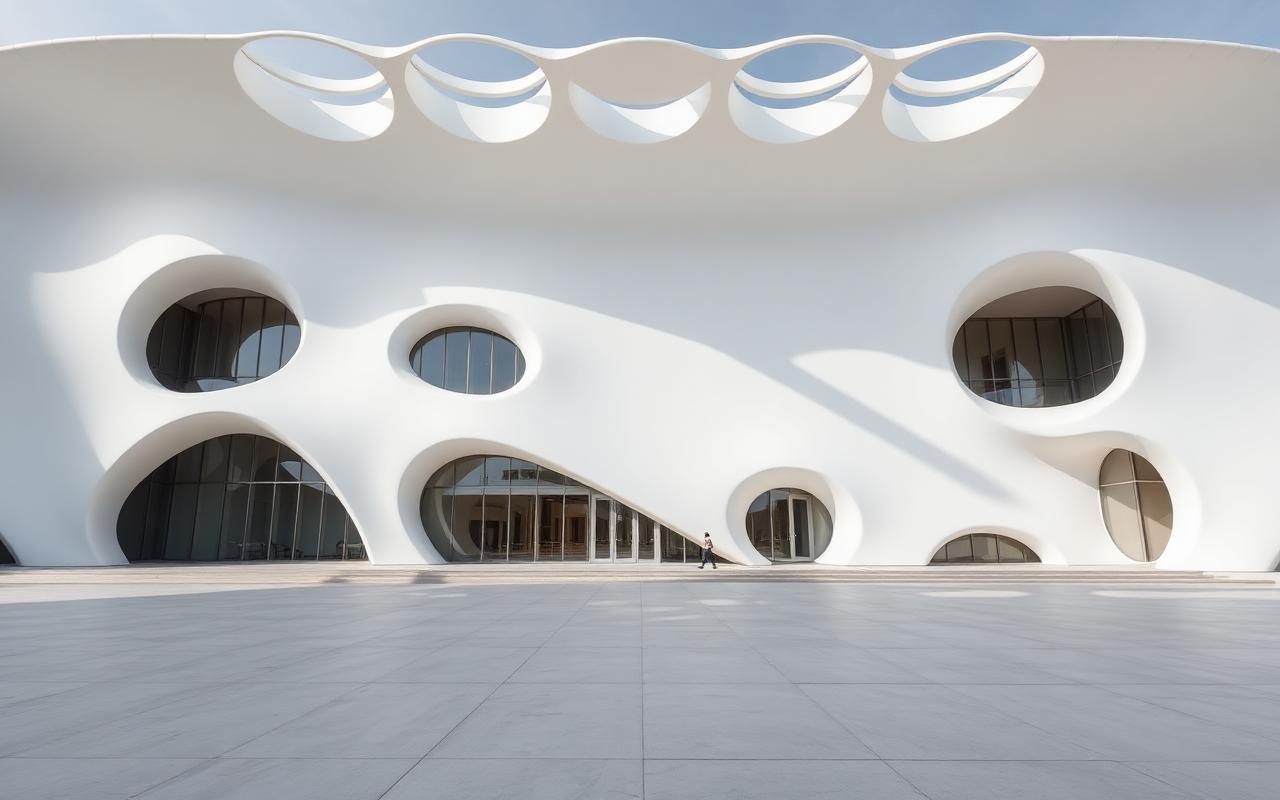
Generative design tools represent the most visible change AI is bringing to architectural practice. These tools take a set of design parameters and constraints and use algorithms to generate large numbers of design solutions. The architect then selects, combines, refines, and develops from the generated options. The process inverts the traditional sequence, in which the designer begins with a concept and iterates toward a solution, replacing it with a process in which computational exploration of possibilities precedes the application of human judgment.
At its best, this inversion produces genuinely better outcomes by exploring territories pure intuition would not reach. A human designer, starting from a concept, tends to develop it in directions consistent with their existing aesthetic and structural repertoire. Generative tools, unconstrained by that repertoire, can produce configurations that are unexpected, counterintuitive, and sometimes more elegant than anything the designer would have reached through conventional development.
The risk is the scenario in which the generative tool substitutes for the development of design judgment rather than augmenting it. The formal vocabulary of AI-generated architecture is developing its own recognizable aesthetic, and like any aesthetic it can become a style applied without genuine engagement with the specific conditions of each project. The best architecture has always been deeply specific, shaped by the particularities of site, program, climate, culture, and the people who will inhabit it.

The performance simulation applications of AI are producing the most unambiguous improvements, and they deserve acknowledgment because the building sector's environmental impact is enormous. Buildings account for a substantial fraction of global energy consumption and carbon emissions, and much of that impact results from buildings not designed to perform well in their specific climatic and usage contexts. AI-powered energy modeling that can simulate building performance across thousands of operating scenarios, optimizing envelope design, orientation, glazing, ventilation, and mechanical systems simultaneously, is enabling levels of optimization previously achievable only through very expensive specialist consultancy.
The integration of real-time operational data with building performance models is producing another category of improvement: the building that learns from how it is actually being used and adapts accordingly. Smart building systems that use AI to adjust HVAC, lighting, and shading based on real-time occupancy, weather, and utility price signals are demonstrating substantial reductions in energy consumption without any reduction in occupant comfort. In some cases the opposite. The energy and comfort benefits are genuinely compatible, and AI is the enabler.

At the urban scale, AI modeling of how buildings, infrastructure, and human activity interact is giving planners new capabilities for understanding the consequences of their decisions before they are made. Shadow and wind modeling that used to require expensive specialist analysis can now be run as a standard part of design development. Transport impact modeling, urban heat island analysis, flood risk assessment: all are becoming more accessible, more rapid, and more integrated into early design decisions, where they can actually shape outcomes rather than simply documenting problems in completed buildings.
The question I always return to in architecture, and that AI makes more rather than less urgent, is whether the tools are being used in service of the people who will inhabit the results. The evidence that spatial environment affects human wellbeing, cognitive function, stress levels, and social behavior is now substantial, and it provides a basis for evaluating architectural AI tools that goes beyond formal novelty or energy efficiency. AI tools that can model occupant experience, not just as an abstract performance metric but as a simulation of how specific people with specific needs will actually move through and inhabit a space, represent a genuinely promising development.
The building I grew up near was demolished because it failed the people who lived in it. The architect who designed it was not malicious. They simply lacked the tools, and perhaps the culture, to understand in advance how the space would actually be experienced. AI gives architects tools their predecessors could not have imagined for understanding that experience before a foundation is poured. Whether those tools are used to produce the brilliant buildings they make possible, or whether they are used primarily to produce the impressive ones, will depend on the values and education of the architects who use them and the clients who commission from them. The technology creates the possibility. The possibility has to be chosen.
Topics in this article
You might also like
View all
The Hardest AI Safety Feature Is Saying No
Useful AI completes tasks. Safe AI also needs to know when to refuse.

AI Is Teaching Us to Accept
Search made us compare sources. AI makes it easy to accept one smooth answer.

The Cognitive Economy of Effort
AI saves mental effort, but some of that effort is how independent judgment grows.