AI That Kills: Who Gave Them Permission?
Lethal autonomous weapons are no longer science fiction. The accountability gap is terrifying.
 Sahir Maharaj10 min read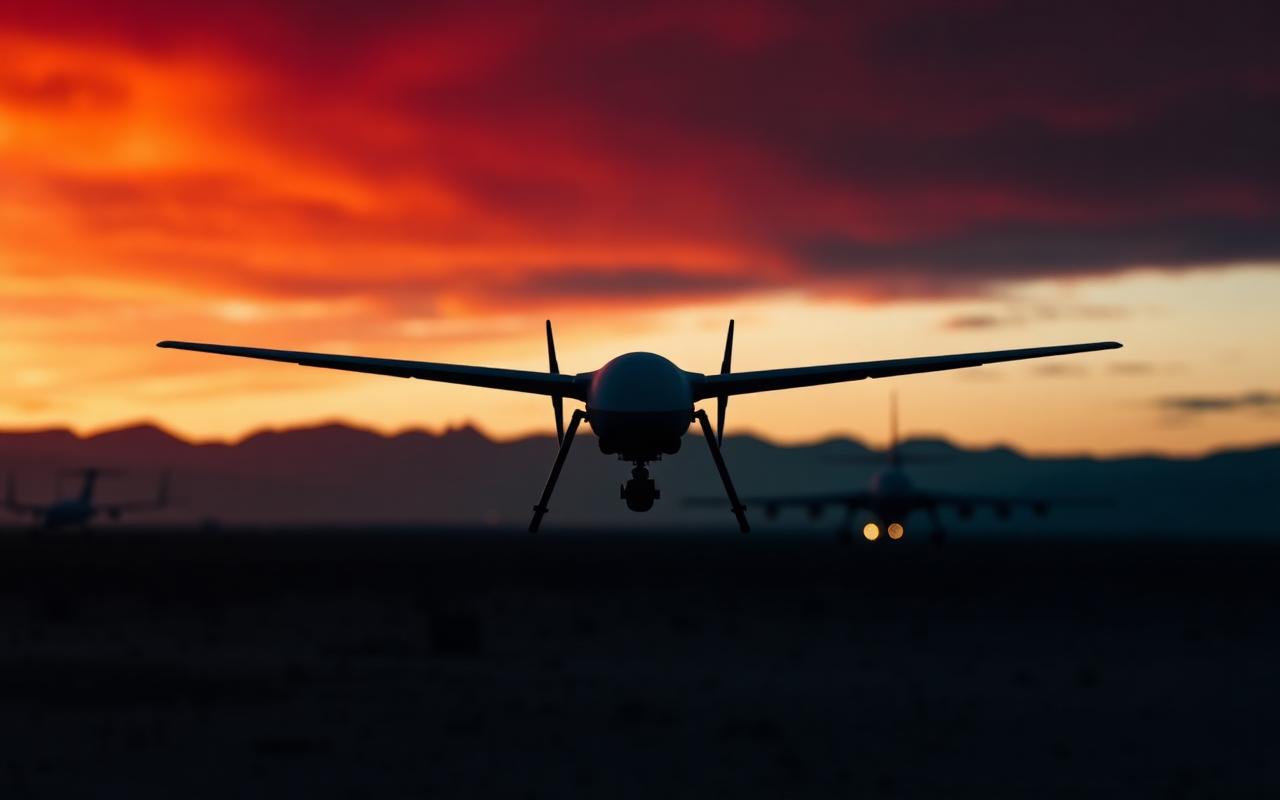
Let me paint you a picture. A drone hovers silently over a conflict zone. No pilot in a cockpit. No soldier with a radio. No human being in the loop. The drone scans, identifies a target, makes a decision, and fires. All of this in under a second. No hesitation, no emotion, no second-guessing. Just code running on silicon doing exactly what it was programmed to do. If that sounds like a science fiction thriller, I understand. But it is not. Lethal autonomous weapons, sometimes called killer robots, are not a future problem. They are a now problem.
These systems are being developed, tested, and in some cases already deployed by militaries around the world. And the questions they raise are not just technical. They are deeply human. Who is responsible when an autonomous weapon makes the wrong call? Can a machine ever truly understand the difference between a combatant and a civilian? And if we hand over life-and-death decisions to algorithms, what does that say about us as a species?
To be clear, this is not a conversation about robots taking over the world in some dramatic Terminator sense. The reality is both more mundane and more unsettling. We are talking about weapons systems that use computer vision, machine learning, and decision-making algorithms to identify and engage targets without a human pulling the trigger. The technology is real. The implications are enormous.

Let me be fair, because this conversation deserves balance. There are genuinely compelling reasons why militaries are investing in autonomous weapons. The most obvious one is speed. Modern warfare moves at a pace that human reaction times simply cannot match. A hypersonic missile travels at five times the speed of sound. A cyberattack can compromise a network in milliseconds. In these environments, waiting for a human to assess and decide is not just slow. It can be strategically catastrophic.
There is also the precision argument. Theoretically, an AI system that has been trained on vast amounts of data could make more consistent targeting decisions than a human soldier who is tired, scared, and under fire. Human beings are prone to panic. A well-designed autonomous system does not panic. It does not get angry. In theory, that consistency could mean fewer civilian casualties, not more.
And then there is the argument about human lives. Fewer soldiers in harm's way means fewer soldiers coming home in flag-draped coffins. Remote and autonomous systems can be sent into the most dangerous environments. If a robot gets destroyed, you build another one. The ethical weight of that trade-off is real, and anyone who has worked with military families understands why it resonates.

Here is where things get deeply uncomfortable. When a human soldier makes a wrong call and kills a civilian, there is a chain of accountability. There is an investigation. There is a court martial. The law of armed conflict exists precisely because we have decided that even in war, there are rules. Now ask yourself this: who is accountable when an autonomous weapon kills the wrong person? The programmer who wrote the targeting algorithm? The officer who deployed the system? The manufacturer who sold it? The answer right now is essentially nobody. And that accountability gap is terrifying.
There is also the question of what happens when these systems get things wrong, because they will. Machine learning models are only as good as their training data, and the real world is messy in ways that training data rarely captures. A system trained to identify armed combatants might misclassify a farmer carrying a tool. A drone programmed to engage vehicles might not distinguish between a military truck and a medical convoy. Unlike a human soldier who might pause, who might notice something feels off, an autonomous system just executes.
Beyond individual errors, there is the macro-level concern about what autonomous weapons do to the calculus of war itself. One of the things that has historically made military conflict costly enough to deter is the human cost. Autonomous weapons could change that equation entirely. If going to war no longer means sending your own people to die, the barrier to initiating conflict gets lower. That is a structural shift in how we think about the use of force, and it should frighten all of us.

The uncomfortable truth is that the technology is moving faster than the governance frameworks designed to regulate it. International discussions about autonomous weapons have been happening at the United Nations for years, but progress has been painfully slow. Major military powers are reluctant to agree to binding restrictions, largely because they do not want to give up a potential strategic advantage. And in the meantime, the systems keep getting more capable, more autonomous, and more widely distributed.
What gives me some hope, oddly enough, is that the conversation is happening at all. There are serious researchers, ethicists, legal scholars, and former military leaders who are pushing hard for meaningful human control requirements in autonomous weapons systems. The idea that there must always be a human in the loop for any lethal decision is gaining traction. Whether that principle can be codified into international law before the technology makes it moot is the critical question of our time, at least in this particular domain.
At the end of the day, this is a question about what kind of world we want to build. AI is a tool, and like every powerful tool in history, from fire to nuclear energy, it can be used to protect or to destroy. The difference with autonomous weapons is that we are not just building a tool. We are building a tool that makes decisions about human life without human judgment. That is a line we should cross very carefully, if at all. Because once we normalize the idea that a machine can decide who lives and who dies, walking that back is going to be a lot harder than the code that made it possible.
Topics in this article
You might also like
View all
The AI That May Never Break a Rule
AI can obey every narrow rule and still create harm at a much larger scale.

Whose Values, Exactly?
AI alignment is not just technical. It is a question of whose values count.

AI Bias Is Not a Bug. It Is a Mirror.
The cycle of discovery and technical fix keeps repeating. The reason is not in the code.