The New Hollywood Driven by AI
How AI is rewriting what it means to make, share, and trust a story.
 Sahir Maharaj10 min read
There is a scene in a recent film that made me pause and rewind it twice. Not because it was spectacular in any obvious way, but because I genuinely could not tell whether the actor on screen was a human performance captured on camera or a synthetic reconstruction generated by AI. The lighting felt real. The micro-expressions felt real. And then I read the production notes and discovered the actor in question had died three years before filming began. What I had watched was a performance that never happened, assembled from archival footage and machine learning, and it was so seamlessly done that my emotional response was entirely genuine.
The entertainment industry is changing faster right now than at almost any point in its history, and AI is the engine of most of that change. Scripts are being drafted with AI assistance. Visual effects that would have required studios with hundreds of employees can now be generated by teams of five. Voices can be cloned. Faces can be de-aged, replaced, resurrected. The grammar of filmmaking is being rewritten in real time, and the people doing the rewriting do not all work in Hollywood.
I want to resist treating this as a simple story about technology disrupting an industry. That framing is technically accurate and almost entirely useless. The more interesting questions are about meaning, authorship, and what stories are actually for. Entertainment is not just a product. It is one of the primary ways human beings process experience, develop empathy, and make sense of the world. When the tools for creating it change this dramatically, the questions about who controls them and what gets lost in the automation are not secondary concerns. They are the whole story.
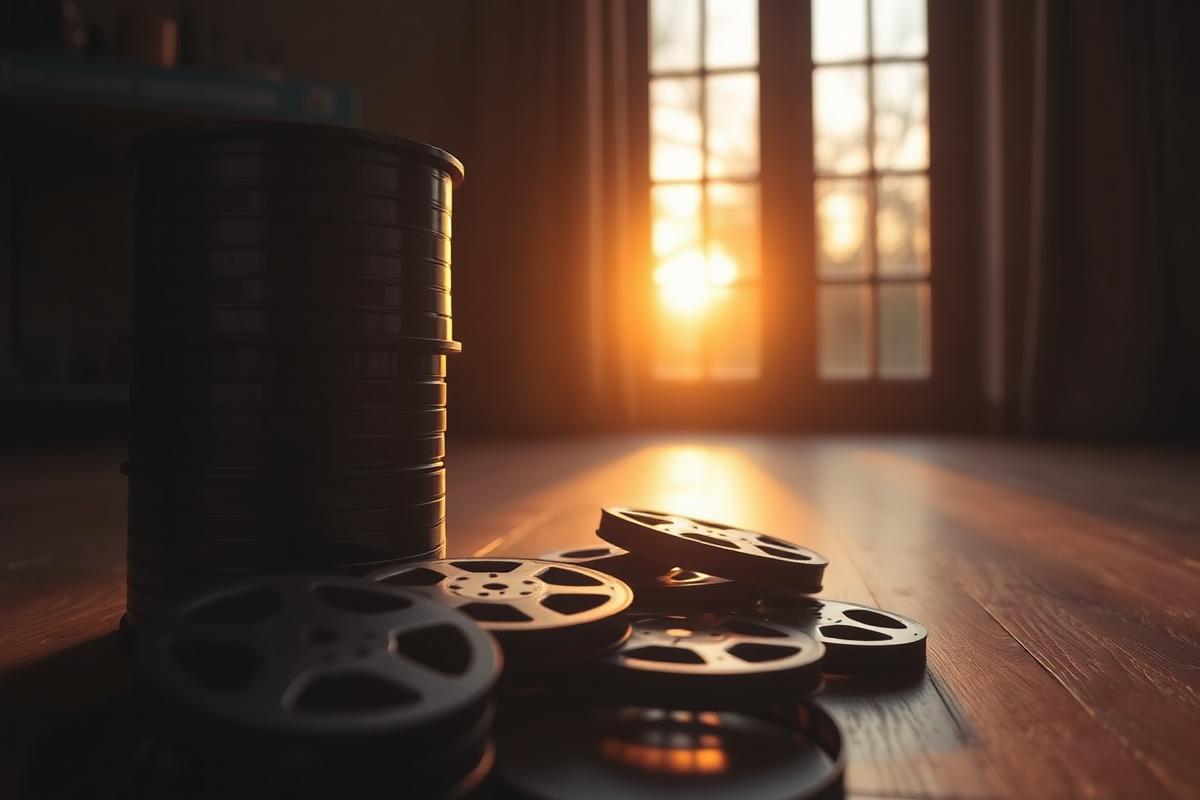
The most genuinely exciting thing about AI in entertainment is what it does to the barriers of entry. For most of the history of film, making something that looked and sounded professional required access to expensive equipment, specialist crews, studio infrastructure, and distribution networks controlled by a small number of powerful institutions. Talent was always distributed broadly across the human population. The resources to express it were not. AI is beginning to change that equation in ways that are hard to overstate. A filmmaker in a small city with a modest budget and the right tools can now produce work that simply was not achievable outside a major studio five years ago.
The implications for diverse storytelling are significant. One of the persistent criticisms of mainstream entertainment has been that the stories it tells reflect the demographics of the people who control production resources rather than the full range of human experience. AI does not solve that structural problem on its own. But it does lower the cost and complexity enough that more storytellers from more backgrounds can bring their work to audiences without needing institutional permission to do so. That is a meaningful expansion of who gets to tell stories.
There is also something worth acknowledging about what AI does for the craft itself when used thoughtfully. The best creative tools do not replace artistic judgment. They amplify it. A director with a clear vision and fluency with these tools can iterate through visual concepts in hours rather than weeks, focus their human energy on the decisions that actually require human sensibility. When the friction between idea and realised image is reduced, certain kinds of creative ambition become more possible. Stories that previously could not be told because the resources to visualise them were too large are now within reach.
Now for the part that keeps a lot of thoughtful people up at night. The same AI capabilities that allow a filmmaker to de-age an actor for a legitimate creative purpose can be used to put any person's face and voice into any scenario without their knowledge or consent. The same technology that reconstructed a deceased performer for a film their estate approved can reconstruct anyone, living or dead, famous or private, for purposes ranging from political disinformation to deeply personal violations that are causing genuine harm right now. Deepfakes are not a hypothetical risk. They are a present and rapidly escalating problem.
The consent question is where this gets most urgent. When an actor signs a contract to appear in a film, they have historically been consenting to the use of their performance in a specific creative context. AI complicates that model in ways the industry has not fully worked through. If a studio scans a performer's likeness and voice, the potential scope of that data's use extends far beyond any single project and any timeframe a standard contract was designed to address. There have already been significant disputes about studios seeking to acquire digital rights to performers' appearances in ways that amount to buying a perpetual license to a person's identity. That is a fundamentally different thing from hiring someone to appear in a film.
Beyond the professional context, there is the broader social problem of what deepfake technology does to the epistemic environment we all share. When any video can plausibly be fabricated, the default skepticism that a healthy media environment requires becomes much more cognitively taxing to maintain. It is not just that false things can be made to look true. It is that the existence of the technology creates doubt about everything, including things that are genuine. The liar's dividend, where a person can claim authentic footage is a deepfake, is already being deployed in legal and political contexts.
There is a question underneath all of this that I find myself returning to, and it is not really about technology at all. It is about what stories are for. The reason human beings have been telling each other stories since before written language is not primarily about entertainment in the modern commercial sense. It is about making meaning. About saying, here is something that happened or could happen, and here is what it felt like from the inside. The best stories make you feel less alone in the experience of being human.
Whether AI-generated or AI-assisted stories can do that same work is a question I cannot fully answer, and I suspect nobody can. There are already examples of AI-assisted narratives that are genuinely moving. Whether that is because the underlying models have absorbed enough human feeling from their training data to reproduce its surface qualities, or whether something more is happening, sits at the intersection of philosophy and engineering. What I do feel confident about is that the stories that matter most will continue to be the ones where a human sensibility, with all its limitations and particularities, is directing the work. The tools will keep getting more powerful. The need for something genuinely human at the centre of the story will not go away.
Throughout the history of entertainment, every major technological shift has eventually produced new forms that nobody predicted and that turned out to be more culturally significant than the disruption that preceded them. Photography did not kill painting. Film did not kill theatre. Television did not kill film. Each new tool changed what came before and created something entirely new alongside it. AI will almost certainly do the same. The blockbusters will get more spectacular and more synthetic. And somewhere outside the main current, a filmmaker with a personal story and a set of AI tools they have made entirely their own will create something so specific and so true it reminds us all over again why we tell stories. That person is probably already working on it.
Topics in this article
You might also like
View all
AI Is Turning Mediocre Ideas Into Beautiful Presentations
Polish used to be evidence of thinking. It is not anymore.
How AI Is Redefining What It Means to Create
When making is nearly free, choosing becomes the creative act.
How AI is Stitching a New Era in Fashion
Virtual models, sustainable production, and a new conversation about bodies.