AI Could Become the New Babysitter
AI can keep kids busy forever. That does not mean it should.
 Sahir Maharaj9 min read
Every generation of parents has found something to feel guilty about. The television babysitter of the 1980s. The video game concerns of the 1990s. The smartphone panic of the 2010s. There is a reliable pattern in which a new screen-based technology is enthusiastically adopted by parents who are exhausted and under-resourced, generates cultural anxiety and research interest, produces a mixed evidence base that confirms both the concerns and the benefits depending on which studies you read, and eventually becomes normalized in moderation. I raise this pattern not to dismiss concerns about AI as the next digital babysitter, but to frame them honestly: we have been here before, the anxiety is real but tends to be more calibrated to the imagined worst case than to the actual experience, and the more useful question than whether AI is bad for children is under what conditions, in what forms, and at what amounts AI tools for children are genuinely developmentally appropriate.
But there is a reason the AI babysitter concern is distinct from its predecessors, and it is worth naming clearly. Television and video games were fundamentally passive or defined-interaction experiences: children were watching or playing, and the experience was bounded by what the content was. AI tools, particularly conversational AI systems, are something qualitatively different: they are responsive, adaptive, and capable of sustaining open-ended interaction that can be simultaneously highly engaging and infinitely extensible. A television show ends. An AI conversation does not unless the child decides to end it or a parent intervenes. The engagement ceiling for AI interaction with children is qualitatively higher than for previous digital entertainment, and the implications of that are worth thinking through carefully.
The babysitter metaphor is useful and somewhat reductive. A babysitter is a human being who keeps a child safe and engaged while the parents are unavailable. What makes a good babysitter is not just safety and engagement but appropriate development: a good babysitter interacts with children in ways that are age-appropriate, that respond to the child as an individual, and that contribute positively to the child's experience. By that standard, whether AI makes a good babysitter depends entirely on what the AI is doing with the child, and what most AI tools currently do with children does not meet a developmentally thoughtful standard of care.
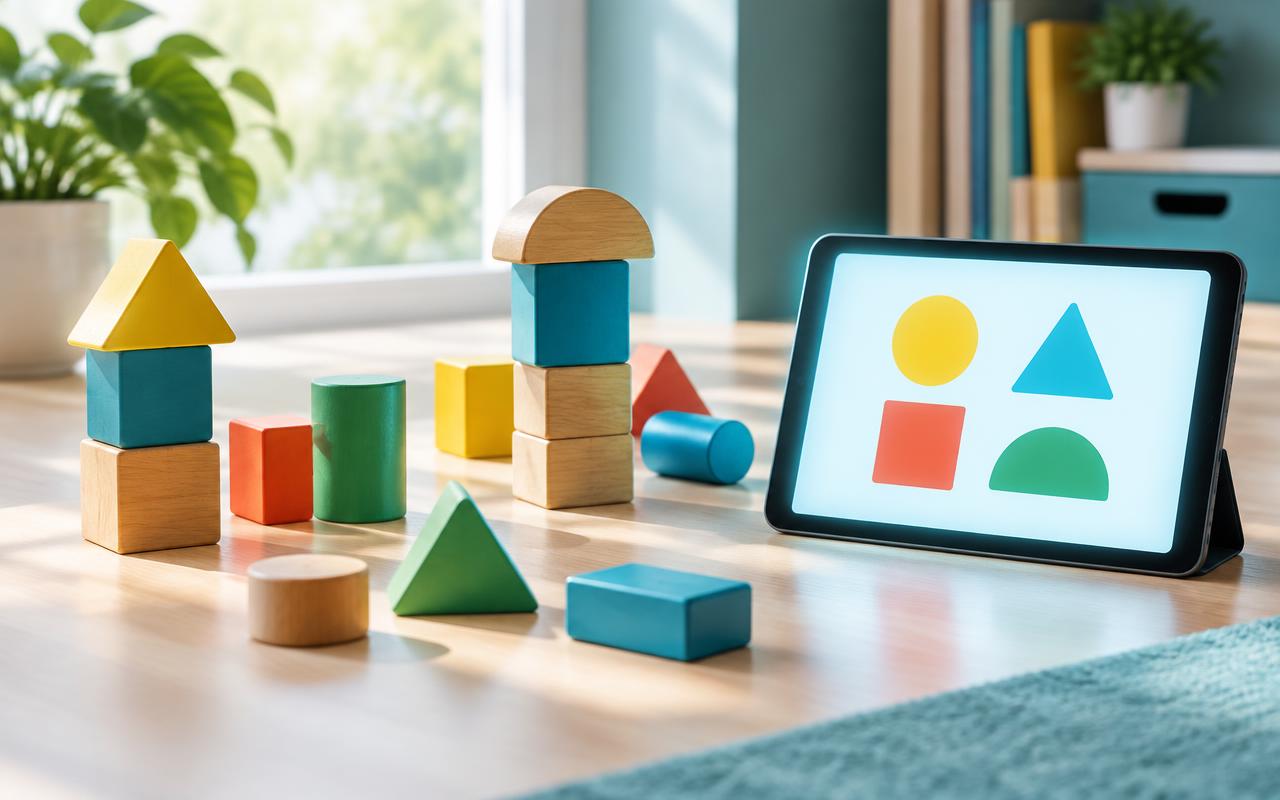
The AI tools that children are currently spending the most time with range from deliberate educational applications to general-purpose conversational AI to AI-enhanced entertainment. The deliberate educational applications are the most defensible: platforms with genuine curriculum alignment, adaptive difficulty, age-appropriate content, and mechanisms for parental visibility into what the child is learning. These platforms can genuinely serve children's development in the way that good educational materials have always served it, and the adaptivity that AI enables is a real improvement over static educational content for many learning purposes.
The general-purpose conversational AI tools are more complicated. Children who use AI assistants for homework help, for creative projects, for information queries, and for conversation are getting variable experiences depending on how they are using the tools and what guardrails exist. The best cases involve children using AI as a learning scaffold that develops their own capacities: asking AI to explain a concept and then working through the explanation, using AI to generate starting points for creative work that they then develop themselves. The worst cases involve children using AI as a shortcut that bypasses the learning process entirely, or children developing relational patterns with AI that substitute for the development of genuine relational skills.
The AI-enhanced entertainment category is where the developmental concern is greatest, because these applications are designed primarily for engagement rather than for development, and the engagement they produce is qualitatively more immersive and more personally tailored than previous forms of children's digital entertainment. AI-driven recommendation systems that keep children engaged with personalized content, AI-powered games that adapt to maintain optimal engagement levels, and AI characters in entertainment contexts that develop the appearance of genuine relationship with the child: each of these is a form of AI babysitting that may be very good at its engagement goals and very poor as a developmental experience.

The developmental concerns about children spending significant time with AI tools fall into several distinct categories, and they vary in their evidence base and their urgency. The social development concern, which I explored in the AI friends piece, is perhaps the most significant: time spent with AI is time not spent in the unstructured peer interaction that develops the social and emotional capacities that human relationships require. This opportunity cost concern is real regardless of whether the AI interaction itself is harmful, and it becomes more serious as AI interaction becomes more engaging relative to human interaction.
The attention and boredom tolerance concern is related but distinct. Boredom, which is genuinely uncomfortable for children and genuinely uncomfortable for parents watching their children be bored, is also a productive developmental state: it is the state that produces self-directed engagement, that develops the capacity to find internal resources for entertainment and engagement rather than depending on external stimulation. AI tools that are responsive, adaptive, and engaging on demand are exceptionally effective boredom relievers. They are also, by that effectiveness, potentially undermining the development of the boredom tolerance and self-directed engagement capacity that are important for later learning and creativity. This concern is less well-evidenced than the social development concern but is taken seriously by developmental psychologists who work on attention and self-regulation.
The dependency and agency concern is perhaps the most speculative but worth naming. Children who develop the habit of consulting AI for decisions, explanations, answers, and entertainment are developing a specific relationship with uncertainty and challenge: they are learning to resolve it by asking AI rather than by tolerating it, working through it, or developing the internal resources to handle it. Whether this habit, developed in childhood, produces adults who are less comfortable with uncertainty and less capable of independent judgment is a question that the current generation of AI-immersed children will answer, but there are enough precedents from research on externalised versus internalised coping strategies to make the question worth taking seriously.

The more useful question than whether children should use AI tools is what better AI tools for children would look like, because the children who are already using AI tools are not going to stop, and the parents who are using AI as a babysitter are not going to stop either. The question is what the products and practices could be that would make AI interaction with children more developmentally appropriate without requiring parents to choose between their children's development and their own exhaustion.
Better AI tools for children would be designed around developmental appropriateness from the ground up: age-specific interaction patterns that are calibrated to what children at different developmental stages need from their interactions with technology, not just what engages them most. They would be designed to build toward independence rather than dependency: to give children enough support to get unstuck while leaving enough struggle to produce the development that struggle provides. They would have meaningful time and content limits that are not primarily about managing parents' anxiety but are genuinely calibrated to the amounts of AI interaction that developmental research suggests are appropriate. And they would have transparency for parents that is genuinely informative rather than just compliance-oriented: not just tracking time but providing insight into what the child has been doing and what developmental experience they have been getting.
The parenting practice that complements better tools is a deliberate intentionality about what role AI plays in a child's day. Not a prohibition, which produces the forbidden fruit effect, and not the path of least resistance, which produces developmental drift. But an active, considered answer to the question: what do I want AI to do in my child's life, and what do I want my child's life to contain that AI cannot provide? The television-as-babysitter generation produced adults who were perfectly functional and who developed the capacities that television could not provide because they also had the childhoods that developed them. The AI-as-babysitter generation can do the same, if the people who care about them are deliberate enough about ensuring they also have the experiences that AI cannot provide.
Topics in this article
You might also like
View all
Will Kids Learn to Think, or Ask AI?
Productive struggle just became optional. Schools are not ready for that.

The AI That May Never Break a Rule
AI can obey every narrow rule and still create harm at a much larger scale.

The Hardest AI Safety Feature Is Saying No
Useful AI completes tasks. Safe AI also needs to know when to refuse.